
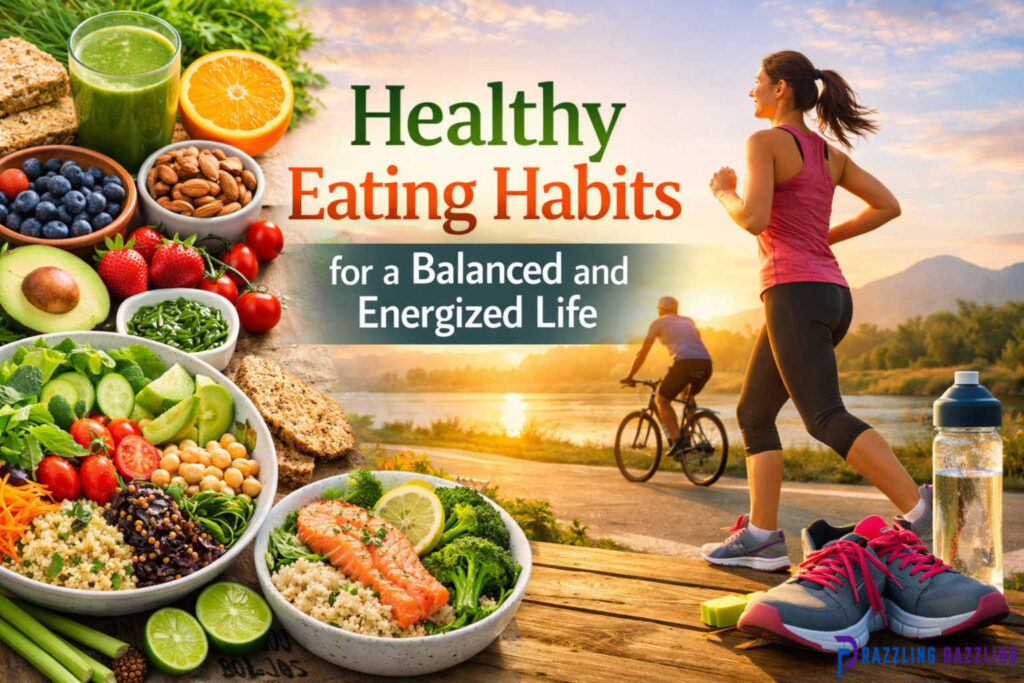
In today’s fast-paced world, maintaining a healthy lifestyle often feels like a challenge. Busy schedules, processed foods, and irregular routines can easily disrupt our eating patterns. However, developing healthy eating habits is one of the most powerful ways to improve your overall well-being, boost energy levels, and support long-term health.
At Razzling Dazzling, we believe that healthy living starts with simple, sustainable choices—especially when it comes to food. This comprehensive guide will help you understand what healthy eating really means and how you can build habits that support a balanced and energized life.
What Are Healthy Eating Habits?
Healthy eating habits are consistent practices that ensure your body gets the nutrients it needs to function properly. It’s not about strict diets or cutting out entire food groups—it’s about balance, variety, and moderation.
A healthy diet includes:
- Whole foods like fruits, vegetables, whole grains, and lean proteins
- Adequate hydration
- Proper portion control
- Regular meal timing
When practiced consistently, these habits can improve both physical and mental health.
Why Healthy Eating Matters
Healthy eating impacts every aspect of your life. It fuels your body, sharpens your mind, and helps prevent chronic diseases. Here are some key benefits:
Boosts Energy Levels
Nutrient-rich foods provide sustained energy throughout the day, unlike sugary snacks that cause quick spikes and crashes.
Supports Weight Management
Balanced meals help regulate appetite and reduce overeating.
Strengthens Immunity
A diet rich in vitamins and minerals helps your body fight infections.
Improves Mental Health
Healthy eating is linked to better mood, reduced stress, and improved focus.
Prevents Chronic Diseases
Good nutrition lowers the risk of conditions like heart disease, diabetes, and obesity.
Essential Components of a Balanced Diet
To build healthy eating habits, it’s important to understand what your body needs.
Carbohydrates (Energy Source)
Choose complex carbohydrates such as:
- Brown rice
- Oats
- Whole wheat bread
These provide long-lasting energy and support digestion.
Proteins (Body Building)
Protein helps repair tissues and build muscles. Good sources include:
- Eggs
- Fish
- Lean meat
- Beans and lentils
Healthy Fats (Brain & Hormone Health)
Not all fats are bad. Healthy fats are essential for your body:
- Nuts and seeds
- Avocados
- Olive oil
Vitamins & Minerals (Immunity Boosters)
Fruits and vegetables are rich in essential nutrients. Aim for a colorful plate to get a variety of vitamins.
Water (Hydration)
Water is often overlooked but is vital for digestion, circulation, and temperature regulation. Drink at least 6–8 glasses daily.
Building Healthy Eating Habits
Creating lasting habits doesn’t happen overnight. Here are practical steps to help you get started:
Start Your Day with a Healthy Breakfast
Breakfast kickstarts your metabolism and provides energy for the day. Choose options like:
- Oatmeal with fruits
- Whole grain toast with eggs
- Yogurt with nuts
Eat Regular Meals
Skipping meals can lead to overeating later. Aim for:
- 3 balanced meals
- 1–2 healthy snacks
Practice Portion Control
Eating too much—even healthy food—can lead to weight gain. Use smaller plates and listen to your body’s hunger signals.
Include More Fruits and Vegetables
Try to fill half your plate with fruits and vegetables. They are low in calories and high in nutrients.
Limit Processed Foods
Processed foods often contain high amounts of sugar, salt, and unhealthy fats. Replace them with whole, natural foods whenever possible.
Reduce Sugar Intake
Excess sugar can lead to weight gain and health issues. Cut back on:
- Sugary drinks
- Candy
- Packaged snacks
Stay Hydrated
Drink water throughout the day instead of sugary beverages. Herbal teas and fresh juices are also good alternatives.
Eat Mindfully
Avoid distractions like TV or phones while eating. Focus on your food to enjoy it more and prevent overeating.
Healthy Snacking Ideas
Snacking can be part of a healthy diet if done right. Choose nutrient-dense options such as:
- Fresh fruits
- Nuts and seeds
- Yogurt
- Whole grain crackers
Avoid chips, sugary snacks, and fried foods.
Meal Planning for Success
Planning your meals can help you stay consistent with healthy eating.
Benefits of Meal Planning:
- Saves time and money
- Reduces unhealthy food choices
- Ensures balanced nutrition
Simple Meal Planning Tips:
- Plan meals for the week
- Prepare ingredients in advance
- Keep healthy snacks ready
Common Mistakes to Avoid
Even with the best intentions, people often make mistakes when trying to eat healthy.
Skipping Meals
This can slow metabolism and lead to overeating later.
Following Extreme Diets
Crash diets are not sustainable and can harm your health.
Ignoring Portion Sizes
Healthy food still needs to be eaten in moderation.
Not Drinking Enough Water
Dehydration can cause fatigue and confusion with hunger.
Healthy Eating for Different Lifestyles
For Busy Professionals
- Prepare meals in advance
- Carry healthy snacks
- Avoid fast food when possible
For Students
- Eat balanced meals for better concentration
- Avoid excessive junk food
- Stay hydrated
For Families
- Encourage home-cooked meals
- Involve kids in meal preparation
- Make healthy eating fun
The Role of Consistency
Healthy eating is not about perfection—it’s about consistency. Occasional treats are fine as long as your overall diet is balanced.
At Razzling Dazzling, we emphasize creating habits that fit your lifestyle. Small changes, when practiced daily, lead to long-term results.
Tips to Stay Motivated
- Set realistic goals
- Track your progress
- Celebrate small achievements
- Surround yourself with supportive people
Sample Daily Healthy Meal Plan
Breakfast:
Oatmeal with fruits and nuts
Snack:
Apple with peanut butter
Lunch:
Grilled chicken with brown rice and vegetables
Snack:
Yogurt with seeds
Dinner:
Fish with salad and whole grain bread
Long-Term Benefits of Healthy Eating
When you maintain healthy eating habits, you can expect:
- Increased energy
- Better sleep
- Improved mood
- Stronger immunity
- Longer lifespan
These benefits make the effort truly worthwhile.
Common Questions About Healthy Eating Habits
What are healthy eating habits?
Healthy eating habits involve consuming a balanced diet with proper portions, including fruits, vegetables, whole grains, and proteins while limiting processed foods.
How can I start eating healthy every day?
Start by adding more whole foods to your meals, reducing sugar intake, drinking enough water, and maintaining regular meal times.
Why is healthy eating important for energy?
Nutritious foods provide steady energy, helping you stay active and avoid fatigue throughout the day.
Can healthy eating help with weight management?
Yes, a balanced diet helps control hunger, reduce overeating, and maintain a healthy weight over time.
How much water should I drink daily?
Most people should aim for about 6–8 glasses of water daily, though needs may vary depending on activity level and climate.
Healthy eating habits are the foundation of a balanced and energized life. By focusing on nutritious foods, proper portions, and consistent routines, you can transform your health and well-being.
Remember, it’s not about making drastic changes overnight—it’s about building sustainable habits that last a lifetime. With guidance and dedication, anyone can achieve a healthier lifestyle.
At Razzling Dazzling, we encourage you to take small steps every day toward better eating habits. Your body and mind will thank you for it.