
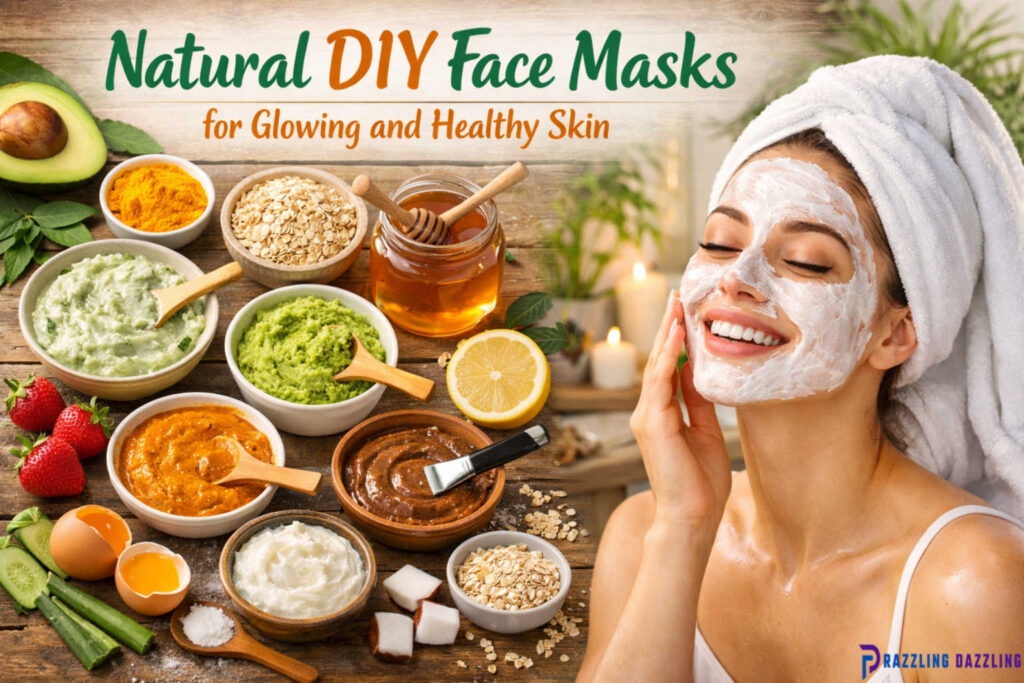
Achieving glowing, healthy skin doesn’t always require expensive skincare products or complicated routines. In fact, some of the most effective remedies come straight from your kitchen. Natural DIY face masks are a safe, affordable, and powerful way to nourish your skin using simple ingredients you can trust.
At Razzling Dazzling, we believe that beauty should be effortless, natural, and accessible to everyone. This guide will walk you through everything you need to know about DIY face masks—from understanding your skin type to trying proven recipes that deliver visible results.
Why Choose Natural DIY Face Masks?
Natural skincare has gained immense popularity, and for good reason. DIY face masks are not only effective but also allow you to avoid harmful chemicals often found in commercial products.
Key Benefits
Free from Harsh Chemicals
Most store-bought products contain synthetic additives, preservatives, and artificial fragrances that may irritate the skin. Natural masks use pure ingredients that are gentle and safe.
Budget-Friendly Skincare
You don’t need to spend a fortune to look good. Ingredients like honey, turmeric, and yogurt are inexpensive and readily available.
Customizable Solutions
Every skin type is different. DIY masks can be tailored to suit your specific needs—whether it’s hydration, acne control, or brightening.
Nutrient-Rich Ingredients
Natural components are packed with vitamins, antioxidants, and minerals that nourish and repair the skin.
Environmentally Friendly
Using natural ingredients reduces packaging waste and supports a sustainable lifestyle.
Understanding Your Skin Type
Before applying any face mask, it’s essential to identify your skin type. This ensures you choose the right ingredients and avoid irritation.
Dry Skin
- Feels tight and rough
- Needs hydration and moisture-rich ingredients
Oily Skin
- Produces excess sebum
- Prone to acne and clogged pores
Combination Skin
- Oily in the T-zone, dry on cheeks
Sensitive Skin
- Easily irritated or red
- Requires soothing, gentle ingredients
Normal Skin
- Well-balanced and low-maintenance
Powerful Natural Ingredients for Face Masks
Here are some commonly used ingredients and their benefits:
- Honey – Natural antibacterial and moisturizer
- Yogurt – Contains lactic acid for gentle exfoliation
- Turmeric – Brightens skin and reduces inflammation
- Aloe Vera – Soothes and hydrates
- Oatmeal – Calms irritation and exfoliates
- Lemon Juice – Helps lighten dark spots (use carefully)
- Cucumber – Refreshes and cools skin
- Banana – Rich in vitamins for nourishment
- Multani Mitti (Fuller’s Earth) – Absorbs excess oil
Best DIY Face Mask Recipes
Honey and Yogurt Glow Mask
Best for: Dry and dull skin
Ingredients:
- 1 tablespoon honey
- 2 tablespoons yogurt
How to Use:
Mix into a smooth paste and apply evenly. Leave for 15–20 minutes, then rinse with lukewarm water.
Benefits:
Hydrates, softens, and brightens your skin naturally.
Turmeric and Milk Brightening Mask
Best for: Uneven skin tone and pigmentation
Ingredients:
- 1 teaspoon turmeric
- 2 tablespoons milk
How to Use:
Apply a thin layer and leave for 10–15 minutes before washing off.
Benefits:
Adds a natural glow and helps reduce dark spots.
Oatmeal and Honey Soothing Mask
Best for: Sensitive or irritated skin
Ingredients:
- 2 tablespoons oatmeal
- 1 tablespoon honey
- Warm water
How to Use:
Soak oatmeal, mix with honey, and apply gently. Leave for 15 minutes.
Benefits:
Reduces redness and calms the skin.
Aloe Vera and Cucumber Hydrating Mask
Best for: Tired, dehydrated skin
Ingredients:
- 2 tablespoons aloe vera gel
- 2 tablespoons cucumber juice
How to Use:
Mix well and apply. Leave for 15 minutes before rinsing.
Benefits:
Refreshes, cools, and deeply hydrates the skin.
Banana and Honey Nourishing Mask
Best for: Dry and aging skin
Ingredients:
- 1 ripe banana
- 1 tablespoon honey
How to Use:
Mash banana and mix with honey. Apply for 20 minutes.
Benefits:
Improves elasticity and leaves skin soft and smooth.
Multani Mitti and Rose Water Oil-Control Mask
Best for: Oily and acne-prone skin
Ingredients:
- 2 tablespoons multani mitti
- Rose water
How to Use:
Mix into a paste and apply. Let it dry before rinsing.
Benefits:
Absorbs excess oil and helps prevent breakouts.
Lemon and Honey Acne Mask
Best for: Acne-prone skin
Ingredients:
- 1 tablespoon honey
- A few drops of lemon juice
How to Use:
Apply lightly and leave for 10 minutes.
Benefits:
Fights bacteria and reduces oiliness. Avoid if you have sensitive skin.
Tips for Best Results
To maximize the benefits of DIY face masks, follow these tips:
- Always cleanse your face before applying a mask
- Perform a patch test to check for allergies
- Use fresh, clean ingredients
- Avoid applying near the eyes
- Follow up with a moisturizer
- Stay consistent but don’t overuse
How Often Should You Apply Face Masks?
- Dry skin: 2–3 times per week
- Oily skin: 2 times per week
- Sensitive skin: Once a week
- Normal skin: 1–2 times per week
Overuse can lead to irritation, so balance is important.
Common Mistakes to Avoid
- Using too many ingredients at once
- Leaving masks on for too long
- Skipping moisturizer afterward
- Not considering your skin type
- Using harsh ingredients frequently
Lifestyle Tips for Naturally Glowing Skin
Great skin isn’t just about what you apply—it’s also about how you live.
Healthy Habits
- Drink plenty of water daily
- Eat fresh fruits and vegetables
- Get 7–8 hours of sleep
- Exercise regularly
- Manage stress effectively
These habits work together with your skincare routine to enhance your natural glow.
Are DIY Face Masks Safe for Everyone?
Natural face masks are generally safe, but precautions are still necessary:
- Avoid ingredients you are allergic to
- Use lemon and turmeric in small amounts
- Consult a dermatologist for severe skin conditions
- Stop use if irritation occurs
Building a Simple Skincare Routine
For best results, include face masks as part of a complete routine:
- Cleanser – Removes dirt and oil
- Toner – Balances skin pH
- Moisturizer – Locks in hydration
- Sunscreen – Protects from UV damage
- Face Mask – Weekly treatment for extra care
Common Questions About DIY Face Masks
Are DIY face masks safe for all skin types?
Yes, but it’s important to choose ingredients based on your skin type and always do a patch test first.
How often should I use a natural face mask?
Most people can use them 1–3 times a week depending on their skin type.
Can DIY face masks help with acne?
Yes, ingredients like honey, aloe vera, and turmeric can help reduce acne naturally.
How long should I leave a face mask on?
Typically, 10–20 minutes is enough for most natural face masks.
Do natural face masks give instant results?
Some masks provide immediate glow, but consistent use is needed for long-term benefits.
Final Thoughts
Natural DIY face masks offer a simple yet powerful way to achieve glowing and healthy skin. With the right ingredients and consistent care, you can transform your skincare routine without relying on expensive products.
At Razzling Dazzling, we encourage embracing natural beauty through safe, effective, and easy solutions. Whether you’re dealing with dryness, acne, or dullness, there’s a DIY face mask that can help restore your skin’s natural radiance.
Start experimenting with these recipes today and enjoy the confidence that comes with naturally glowing skin.