
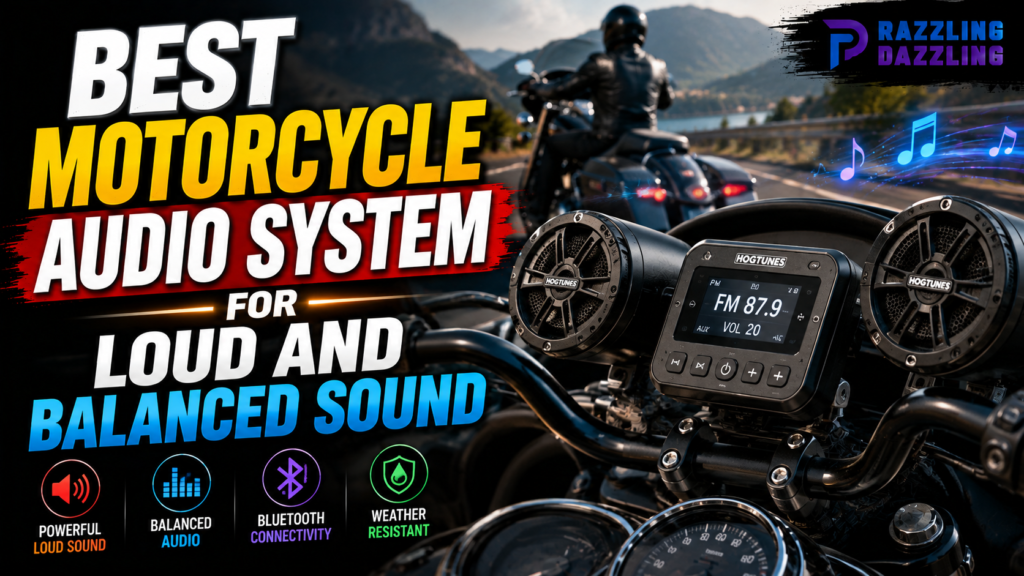
A good motorcycle audio system can make long rides more enjoyable by bringing clear music to the road without overwhelming the listener with harsh highs or muddy bass. Unlike a home audio setup, motorcycle speakers have to compete with wind, engine, and road noise while dealing with vibration, sunlight, dust, and moisture.
Choosing the best motorcycle audio system for loud and balanced sound therefore requires more than simply looking for the highest wattage. Speakers, amplifier power, weather resistance, placement, source connectivity, and tuning all affect the final result.
Whether you ride a touring motorcycle, cruiser, bagger, or another bike with room for an audio upgrade, the right combination can deliver strong volume while maintaining vocals, instruments, bass, and treble.
What Makes a Good Motorcycle Audio System?
Motorcycle audio systems are designed for a much more demanding environment than typical indoor speakers. The system needs to produce enough output to remain clear while riding, but it should also maintain a balanced sound profile.
A quality setup usually includes several important components:
- Motorcycle-specific speakers
- A suitable amplifier
- A Bluetooth or compatible audio source
- Proper speaker mounting
- Weather-resistant components
- Appropriate wiring and protection
- Careful audio tuning
The best system isn’t necessarily the loudest one. A balanced system should allow you to hear vocals and instruments clearly while still providing enough bass and detail for enjoyable listening.
Why Motorcycle Audio Needs More Power
Wind and road noise can make music difficult to hear at riding speeds. A speaker that sounds impressive in a quiet garage may not perform the same way once the motorcycle is moving.
This is why motorcycle audio systems often use efficient speakers and dedicated amplifiers. For example, Crutchfield’s motorcycle audio installations demonstrate how compact powersports amplifiers can provide substantial power while fitting into limited spaces.
However, adding more power isn’t automatically the answer. Speakers and amplifiers need to be matched properly. Too little clean power can make a system sound weak, while an unsuitable amplifier or excessive volume can compromise sound quality.
Choose Weather-Resistant Motorcycle Speakers
Weather resistance should be one of the first things to consider when selecting motorcycle speakers.
Motorcycles can encounter rain, humidity, dust, sunlight, and temperature changes. Standard indoor speakers aren’t designed for those conditions.
Look for speakers specifically designed for motorcycle, marine, or powersports applications. Many models use materials intended to resist moisture and UV exposure.
For example, current motorcycle-oriented speaker options include weather-resistant polypropylene, IMPP, and other treated speaker-cone materials. Some models are specifically rated for water resistance or waterproof applications.
Why Speaker Materials Matter
The cone and surround have a major effect on durability. Materials that resist moisture can help the speaker continue performing when exposed to changing weather conditions.
A strong grille and durable frame are also useful because motorcycle speakers are exposed to vibration and outdoor conditions.
Consider Speaker Size and Placement
Speaker size affects how a motorcycle audio system produces different parts of the frequency range.
Smaller speakers can work well when space is limited, particularly for handlebar-mounted systems. Larger 6.5-inch or 6×9-inch speakers can provide more potential for fuller sound when the motorcycle has suitable mounting locations.
For example, motorcycle audio systems commonly use 6.5-inch speakers in fairings and 6×9-inch speakers in saddlebag applications.
Placement is equally important.
Speakers should be positioned so that their sound reaches the rider rather than being directed toward areas where much of the output is lost. Fairing-mounted speakers can provide a strong front soundstage, while additional rear speakers can create a more complete system.
Choose an Amplifier That Matches Your Speakers
An amplifier is one of the most important parts of a high-output motorcycle audio system.
The amplifier supplies the power needed to drive the speakers. A properly matched amplifier can help a system maintain cleaner output when music becomes demanding.
When choosing an amplifier, consider:
- RMS power
- Number of channels
- Speaker impedance
- Amplifier efficiency
- Physical size
- Weather resistance
- Installation requirements
RMS power is generally more useful for comparing continuous power capability than peak power ratings.
Compact powersports amplifiers are particularly useful because motorcycles have limited installation space. Some current models are designed specifically for motorcycle and marine environments and use weather-resistant construction.
Two-Channel vs. Four-Channel Motorcycle Audio
A basic motorcycle audio system may only require two amplifier channels.
A two-channel setup can be suitable for a pair of front speakers or another simple configuration.
A four-channel amplifier provides more flexibility. It can power front and rear speakers independently, making it useful for riders who want to expand their system.
Some motorcycle-specific kits combine front speakers, rear speakers, and a four-channel amplifier in a single package.
For a balanced setup, adding speakers isn’t always necessary. If your motorcycle has limited electrical capacity or installation space, a well-designed two-speaker system may be preferable to an unnecessarily complicated setup.
Bluetooth Connectivity Makes Riding Easier
Bluetooth is one of the most convenient features in a modern motorcycle audio system.
Instead of connecting a physical audio source, Bluetooth allows compatible devices to stream music wirelessly to the motorcycle’s receiver or speaker system.
Some handlebar-mounted systems include Bluetooth, integrated amplification, and additional inputs. For example, current all-weather motorcycle speaker systems can provide Bluetooth streaming while keeping the controls accessible to the rider.
When evaluating Bluetooth functionality, consider:
- Pairing reliability
- Ease of operation
- Compatibility with your device
- Control accessibility
- Audio source options
Controls should be easy to understand and use without creating unnecessary distractions while riding.
Sound Quality: Loudness vs. Balance
It’s easy to assume that the loudest motorcycle audio system is automatically the best. That’s not necessarily true.
A system that emphasizes volume at the expense of clarity can become tiring to listen to. Harsh treble, weak vocals, or excessive bass can make music less enjoyable.
A balanced system should provide:
- Clear vocals
- Controlled bass
- Detailed treble
- Good midrange
- Sufficient volume
- Minimal distortion
Motorcycle audio systems need enough output to overcome environmental noise, but the goal should be clean usable volume, not simply maximum volume.
Why Midrange Matters
The midrange contains many important elements of music, including vocals, guitars, keyboards, and other instruments.
If the midrange is too weak, music can sound distant or hollow. If it is too dominant, the system may sound congested.
This is one reason quality motorcycle speakers often use two-way designs with separate woofers and tweeters. Current motorcycle speaker options from several manufacturers use this approach to provide a combination of midrange and high-frequency reproduction.
Don’t Ignore the Tweeters
Tweeters reproduce higher-frequency information that contributes to detail and clarity.
On a motorcycle, clear high frequencies can help music remain intelligible against background noise. Some motorcycle speakers use dome tweeters or other high-frequency drivers designed specifically for powersports environments.
A good tweeter should provide detail without making the system sound excessively sharp.
What About Bass?
Bass is often one of the hardest aspects of motorcycle audio.
Motorcycle speakers have limited enclosure space, and low-frequency energy can be difficult to reproduce effectively in an open-air environment.
Rather than chasing excessive bass, look for speakers with strong mid-bass performance and an amplifier that can drive them properly.
Larger 6×9-inch speakers may offer more low-frequency potential than very small speakers when the motorcycle provides an appropriate mounting location. Some powersports speaker models are specifically designed to deliver stronger mid-bass performance.
Handlebar Speakers vs. Fairing Speakers
There are several ways to install motorcycle speakers.
Handlebar-Mounted Speakers
Handlebar-mounted speaker systems are attractive because they can be relatively simple to install and don’t require major changes to the motorcycle.
Some all-in-one systems include multiple drivers, built-in amplification, Bluetooth connectivity, and weather-resistant housings.
They can be a practical choice for riders who want an uncomplicated audio upgrade.
Fairing-Mounted Speakers
Fairing-mounted speakers are common on touring motorcycles.
They can provide a more integrated appearance and direct sound toward the rider. Many motorcycle-specific kits are designed to fit existing factory speaker locations.
Saddlebag Speakers
Saddlebag-mounted speakers can provide additional output and help create a larger soundstage.
They are particularly useful for motorcycles designed for larger touring audio systems, although installation requirements vary considerably by motorcycle model.
Installation Matters as Much as the Components
Even excellent speakers can perform poorly if they’re installed incorrectly.
Before installation, consider:
- Available mounting depth
- Speaker size
- Existing mounting locations
- Wiring routes
- Amplifier location
- Battery capacity
- Fuse requirements
- Protection from moisture
- Heat around electronic components
Vehicle-specific kits can simplify installation because they may include brackets, wiring harnesses, and connectors designed for particular motorcycles.
If you’re unfamiliar with motorcycle electrical systems, professional installation is a sensible option. Incorrect wiring can damage equipment or create electrical problems.
Protect Your Motorcycle’s Electrical System
A powerful audio system places additional demands on the motorcycle’s electrical system.
Before installing an amplifier, make sure the motorcycle’s charging system can support the additional electrical load.
Efficient amplifiers can be helpful because they can provide strong output without unnecessarily wasting electrical power. Some motorcycle-specific amplifiers are designed with efficiency and compact installation in mind.
Always follow the manufacturer’s wiring and fuse recommendations.
How to Build a Balanced Motorcycle Audio System
You don’t necessarily need the most expensive components to achieve good sound.
A practical approach is to start with the speakers.
Choose weather-resistant speakers that fit your motorcycle and provide the sound character you prefer. Then select an amplifier that matches their RMS requirements and impedance.
Next, consider your source. If you primarily stream music from a phone, Bluetooth may be enough. If you want additional control or integration, a dedicated motorcycle receiver may be more appropriate.
Finally, tune the system carefully.
Adjust gain, equalization, crossover settings, and speaker balance gradually. The goal is to create a sound profile that remains clear when riding without unnecessarily pushing the equipment.
Common Mistakes to Avoid
Choosing Speakers Only by Wattage: A higher wattage number doesn’t automatically mean better sound. Speaker sensitivity, construction, frequency response, and amplifier matching also matter.
Using Indoor Speakers Outdoors: Regular home speakers aren’t designed for constant exposure to moisture and outdoor conditions.
Buying an Oversized Amplifier: More amplifier power isn’t always better. The amplifier should be appropriate for the speakers and the motorcycle’s electrical system.
Ignoring Speaker Placement: Even excellent speakers can sound disappointing if they are poorly positioned.
Turning Everything Up to Maximum: Maximum volume can introduce distortion and make listening uncomfortable. A properly tuned system should provide useful volume while retaining clarity.
How Much Should You Spend?
The right budget depends on your motorcycle and how extensive an upgrade you want.
A basic system may consist of a pair of weather-resistant speakers and a compact amplifier.
A more advanced setup could include:
- Front speakers
- Rear speakers
- Four-channel amplifier
- Bluetooth receiver
- DSP
- Custom mounting hardware
- Professional installation
Current motorcycle audio packages range from relatively simple speaker upgrades to complete multi-speaker systems with amplifiers and installation components.
Instead of spending the most money possible, prioritize the components that solve your biggest problem—whether that’s insufficient volume, poor clarity, weak bass, or lack of weather resistance.
The best motorcycle audio system for loud and balanced sound combines appropriate speakers, clean amplifier power, durable construction, practical placement, and careful tuning.
Start by choosing motorcycle-specific, weather-resistant speakers. Match them with an amplifier that provides suitable RMS power and works with your motorcycle’s electrical system. Bluetooth connectivity can make everyday use more convenient, while thoughtful speaker placement can significantly improve clarity.
Most importantly, don’t judge a system by loudness alone. The best setup should deliver enough volume for enjoyable listening while keeping vocals, instruments, bass, and treble balanced.
Frequently Asked Questions
1. What is the best motorcycle audio system for loud sound?
The best system combines efficient motorcycle-specific speakers with a properly matched amplifier. Speaker placement and tuning are also important for producing strong usable volume.
2. Are motorcycle speakers waterproof?
Some motorcycle speakers are designed to be waterproof or highly weather resistant, but protection levels vary. Always check the manufacturer’s specifications before installation.
3. Do I need an amplifier for motorcycle speakers?
Not always. Some compact systems include built-in amplification. However, a dedicated amplifier can provide more power and flexibility for larger motorcycle audio systems.
4. Are 6.5-inch speakers good for motorcycles?
Yes. 6.5-inch speakers are commonly used in motorcycle applications because they can provide a useful balance between size, output, and installation flexibility.
5. Are 6×9 speakers better for motorcycle audio?
6×9 speakers can provide strong output and useful mid-bass when the motorcycle has suitable mounting space. However, the best size depends on your motorcycle and desired system configuration.
6. Is Bluetooth useful for motorcycle audio?
Yes. Bluetooth allows compatible devices to stream music without a physical audio cable. Many modern motorcycle audio systems include Bluetooth as a standard feature.
7. How can I make motorcycle speakers sound better?
Use weather-resistant speakers, match the amplifier correctly, optimize speaker placement, and tune the system’s gain and equalization. Avoid excessive volume that causes distortion.
8. Can motorcycle audio drain the battery?
A high-powered audio system can increase the electrical load. The system should be matched to the motorcycle’s charging capacity, and proper wiring and fusing should be used.
9. Should I install motorcycle speakers myself?
Simple systems may be suitable for experienced DIY installers, but complex installations involving amplifiers, additional wiring, or custom mounting may be better handled by a qualified professional.
10. What makes motorcycle audio different from car audio?
Motorcycle audio operates in a much more exposed environment and must deal with wind, road noise, vibration, weather, and limited installation space. That’s why motorcycle-specific equipment is generally preferable.
Make Your Motorcycle Audio Upgrade Smarter
Ready to improve your motorcycle’s sound system? At Razzling Dazzling, we help readers discover practical technology and audio solutions through straightforward guides and useful buying advice. Explore your options, compare features carefully, and choose an audio setup that fits your motorcycle, riding style, and listening preferences.