
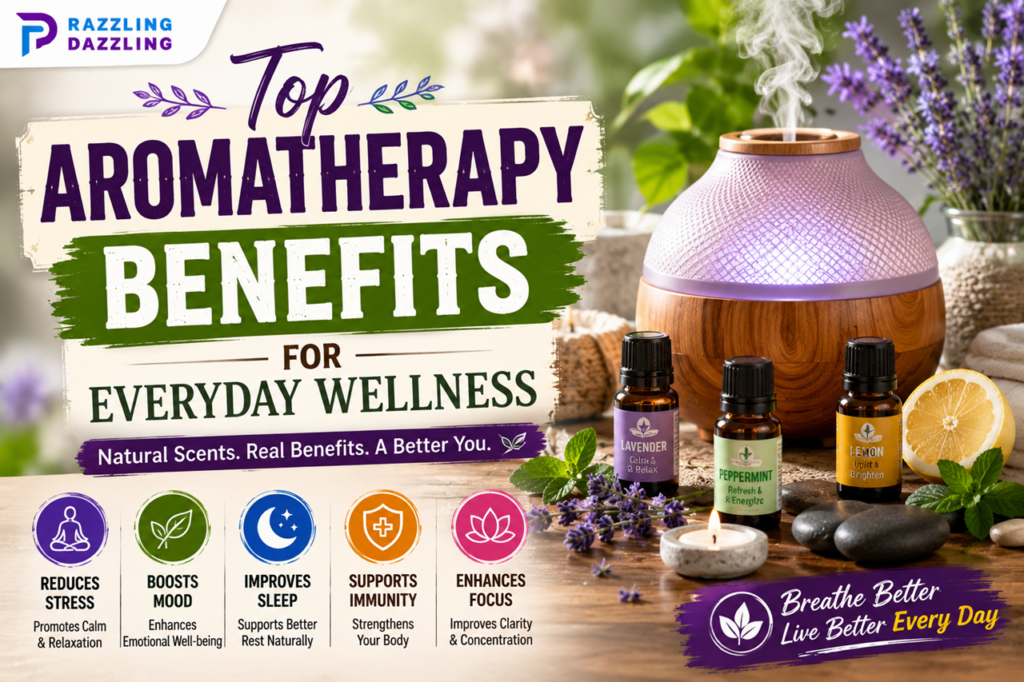
Modern life can feel busy. Between school, work, household responsibilities, social activities, and everyday tasks, finding simple ways to create moments of calm can be valuable. Aromatherapy is one approach many people use to make their surroundings feel more relaxing and pleasant.
Aromatherapy generally involves using aromatic plant-derived substances, particularly essential oils, as part of a wellness routine. People may experience these scents through diffusion, inhalation, or appropriately diluted topical products. While aromatherapy should not be considered a replacement for professional medical care, it can be a pleasant addition to everyday self-care.
Different scents can create different experiences. Some people prefer fresh citrus aromas during the day, while others enjoy lavender or other gentle scents as part of a relaxing evening routine.
At Razzling Dazzling, we believe wellness routines should be practical, accessible, and easy to understand. In this guide, we’ll explore some of the commonly discussed aromatherapy benefits and explain how you can incorporate pleasant scents into your everyday routine safely.
What Is Aromatherapy?
Aromatherapy is a complementary wellness practice involving aromatic substances derived from plants, particularly essential oils.
Essential oils are concentrated extracts that contain aromatic compounds from plants. Commonly used oils include lavender, peppermint, eucalyptus, lemon, sweet orange, and tea tree.
Aromatherapy can be incorporated into everyday routines in different ways. A diffuser may disperse an aroma into a room, while some products are designed for appropriately diluted topical use.
The experience can be highly personal. A scent that one person finds relaxing may not appeal to someone else, so discovering which aromas you enjoy is an important part of creating a comfortable routine.
1. Creates a Relaxing Environment
One of the most popular reasons people use aromatherapy is to create a relaxing atmosphere.
A pleasant scent can change how a room feels and may become associated with quiet activities such as reading, stretching, journaling, or taking a break.
You don’t need a complicated routine. Turning on a diffuser for a short period while you unwind can become a simple transition between a busy part of the day and a calmer one.
The benefit here is largely about creating an environment that encourages relaxation rather than treating a specific health condition.
2. May Support Stress Management
Everyday stress is a normal part of life, and people use many different strategies to manage it.
Aromatherapy may be one small part of a broader stress-management routine. Research has investigated whether certain essential-oil aromas may influence perceived stress and relaxation, although results vary depending on the oil, method of use, and individual.
Rather than expecting a scent to eliminate stress, think of aromatherapy as an environmental tool that can accompany other healthy habits.
For example, you might combine a pleasant aroma with:
- Deep breathing
- Gentle stretching
- Reading
- Quiet music
- A short break from screens
- Mindfulness exercises
The combination can help create a dedicated period for slowing down.
3. Can Complement a Bedtime Routine
Many people associate certain calming scents with nighttime relaxation.
Lavender is particularly well known for its use in bedtime routines, and some research has explored its relationship with sleep and relaxation. However, aromatherapy shouldn’t be viewed as a guaranteed treatment for sleep problems.
If you enjoy a particular scent, using it as part of a consistent evening routine may help create a familiar environmental cue that it’s time to slow down.
A simple routine might involve dimming the lights, putting away electronic devices, preparing for bed, and enjoying a pleasant aroma for a short period.
4. Makes Your Home Smell Fresh
Sometimes the simplest benefit is one of the most enjoyable.
Aromatherapy can make a room smell fresh, inviting, or comforting without relying on traditional air fresheners.
Citrus aromas such as lemon and sweet orange are popular for creating a bright, fresh atmosphere. Floral scents can provide a softer environment, while herbal or woodsy aromas may appeal to people who prefer earthy fragrances.
Your preferred scent can depend on the room and time of day.
For example, a fresh citrus aroma may feel appropriate in a kitchen or living area, while a softer fragrance may be more appealing in a bedroom.
5. Can Support a Mindful Routine
Mindfulness involves intentionally paying attention to the present moment.
Aromas can provide a sensory focus during simple mindfulness exercises.
Instead of multitasking, you can sit quietly and notice the scent, your breathing, and the surrounding environment.
The goal isn’t to achieve a particular physical effect from an essential oil. Instead, the aroma becomes one element of a focused, intentional routine.
This can be particularly useful for people who enjoy sensory-based relaxation practices.
6. May Help Create an Energizing Atmosphere
Not every aromatherapy routine has to be about relaxation.
Some people prefer refreshing aromas during the daytime. Citrus and minty scents are commonly chosen when people want their environment to feel fresh and energetic.
Peppermint, for example, has a distinctive cool, minty aroma that many people associate with freshness.
Using an uplifting scent while organizing your workspace, preparing for the day, or doing household tasks can make the environment feel more pleasant.
It’s important to distinguish this from claims that essential oils provide a medical or guaranteed energy boost. The experience is subjective and varies from person to person.
7. Adds Comfort to a Self-Care Routine
Self-care doesn’t have to involve elaborate products or complicated schedules.
Small rituals can make everyday routines feel more intentional.
A pleasant aroma can become part of activities such as:
- Taking a relaxing bath
- Reading
- Journaling
- Gentle stretching
- Meditation
- Getting ready for bed
- Enjoying a quiet cup of tea
The scent itself may not be the entire benefit. Creating dedicated time for yourself can also make a wellness routine feel more enjoyable and consistent.
8. Can Enhance the Atmosphere During Yoga or Meditation
Yoga, breathing exercises, and meditation are often associated with calm environments.
A subtle aroma can complement these activities by making your space feel more intentional.
If you’re using a diffuser, keep the scent mild and make sure the room has appropriate ventilation. You should also avoid scents that cause discomfort, headaches, coughing, or irritation.
A wellness environment should feel comfortable—not overwhelming.
9. Provides a Pleasant Sensory Experience
Our sense of smell is closely connected with memory and emotion.
A familiar aroma can remind someone of a particular place, season, or experience. This is one reason fragrance can have such a noticeable effect on how people perceive an environment.
Aromatherapy allows you to experiment with different scent profiles and discover which ones you enjoy.
You might prefer:
Citrus: Bright, fresh, and clean.
Floral: Soft and gentle.
Herbal: Fresh and natural.
Woodsy: Warm and earthy.
Minty: Crisp and refreshing.
There is no universal “best” scent. Personal preference matters.
10. Can Help Establish Daily Routines
Consistency is often important when building wellness habits.
Aromatherapy can serve as a simple cue for a particular activity.
For example, you might associate one pleasant scent with your evening wind-down routine. Over time, the scent becomes part of that familiar routine.
This doesn’t mean the oil itself creates a guaranteed psychological or physical response. Instead, the repeated combination of scent and activity can make the routine feel more recognizable and enjoyable.
Popular Essential Oils for Everyday Aromatherapy
Different essential oils have different aromas and traditional uses.
- Lavender: Lavender is one of the most recognizable aromatherapy scents. Its floral aroma is commonly associated with relaxation and evening routines.
- Peppermint: Peppermint has a strong, cool, minty fragrance. It is often chosen for a fresh daytime atmosphere.
- Lemon: Lemon provides a bright citrus aroma that many people enjoy in kitchens, living areas, and workspaces.
- Sweet Orange: Sweet orange has a softer citrus scent that can create a cheerful and inviting atmosphere.
- Eucalyptus: Eucalyptus has a distinctive fresh, herbal aroma. It is commonly used in personal-care and aromatic products.
- Tea Tree: Tea tree has a strong herbal scent and is widely used in various personal-care products.
Remember that “natural” doesn’t automatically mean “safe for everyone.” Essential oils are highly concentrated substances and should be handled carefully.
How to Use Aromatherapy at Home
A diffuser is one of the most common ways to experience essential-oil aromas.
Depending on the product, other methods may include personal inhalers or properly diluted topical applications.
Before using any essential oil, read the product instructions carefully.
If you’re using a diffuser:
- Follow the manufacturer’s instructions.
- Use the recommended amount of oil.
- Keep the area appropriately ventilated.
- Avoid prolonged exposure if the scent becomes overwhelming.
- Stop using it if you experience irritation or discomfort.
- Keep oils and diffusers away from children and pets unless the product is specifically considered appropriate for them.
Aromatherapy Safety Tips
Essential oils are concentrated products, so safe use is important.
Don’t Assume More Is Better
Using a larger amount of essential oil doesn’t necessarily provide greater benefits. It can instead make the aroma overwhelming and may increase the risk of irritation.
Be Careful With Skin Application
Many essential oils should be diluted before being applied to skin.
Never apply an essential oil directly to your skin unless the product specifically states that it is safe to do so in that form.
Consider Allergies and Sensitivities
Some people may experience skin irritation, headaches, coughing, or other reactions to fragrances.
If a particular scent makes you feel uncomfortable, stop using it.
Keep Oils Stored Safely
Essential oils should be stored according to the manufacturer’s instructions and kept away from young children.
Use Extra Care Around Pets
Some essential oils can be unsafe for animals. If you have pets, research the specific oil and ask a veterinarian when appropriate before using essential-oil products around them.
Don’t Ingest Essential Oils
Essential oils are highly concentrated. They should not be swallowed unless specifically directed by a qualified professional using a product and method appropriate for ingestion.
Aromatherapy and Medical Conditions
Aromatherapy is considered a complementary wellness practice rather than a replacement for professional medical treatment.
If you have a medical condition, take medication, are pregnant, or have significant allergies or sensitivities, speak with a qualified healthcare professional before introducing essential oils into your routine.
Do not use aromatherapy as a substitute for prescribed treatment.
If you experience persistent sleep problems, severe stress, pain, breathing difficulties, or other concerning symptoms, seek appropriate professional advice.
How to Build a Simple Aromatherapy Routine
You don’t need a large collection of essential oils.
Start by choosing one or two scents that you genuinely enjoy.
Then decide when you’d like to use them.
For example, a simple routine might look like this:
- Morning: Choose a fresh scent while preparing for the day.
- Afternoon: Use a pleasant aroma while taking a short break.
- Evening: Choose a calming scent while reading or preparing for bed.
The key is consistency and enjoyment rather than complexity.
Common Aromatherapy Mistakes to Avoid
- Using Too Much Oil: A strong aroma can quickly become unpleasant. Start with the recommended amount.
- Buying Too Many Oils: You don’t need a dozen bottles. Start with a small selection and learn what you enjoy.
- Ignoring Product Instructions: Different diffusers and essential oils have different instructions. Always read the label.
- Assuming Aromatherapy Treats Everything: Aromatherapy can be part of a wellness routine, but it shouldn’t replace appropriate medical care.
Forgetting About Other People
A scent you love may bother someone else in your household. Keep shared spaces comfortable for everyone.
The top aromatherapy benefits for everyday wellness are often connected to creating a more pleasant and intentional environment. Aromatherapy can complement relaxation routines, bedtime habits, mindfulness, yoga, and everyday self-care.
Some people enjoy lavender for its gentle floral aroma, while others prefer citrus or minty scents that make a room feel fresh and energetic. The most important factor is finding scents you personally enjoy and using them responsibly.
Aromatherapy isn’t a cure-all, and claims about essential oils should be approached thoughtfully. Research on specific benefits varies, and individual experiences can differ considerably.
At Razzling Dazzling, we believe wellness products should be approached with both curiosity and common sense. Our goal is to provide practical information that helps you understand products, compare options, and build routines that fit your lifestyle.
Frequently Asked Questions
1. What are the main benefits of aromatherapy?
Aromatherapy is commonly used to create a pleasant environment, support relaxation routines, complement mindfulness, and make everyday self-care more enjoyable. Research into specific health effects varies by essential oil and method of use.
2. Which essential oil is best for relaxation?
Lavender is one of the most popular choices for relaxation and evening routines. However, scent preference is personal, so another aroma may be more enjoyable for you.
3. Can aromatherapy help with sleep?
Some research has examined aromatherapy, particularly lavender, in relation to sleep and relaxation. However, it should not be considered a guaranteed treatment for sleep problems.
4. Can I use essential oils every day?
Some people incorporate essential oils into daily routines, but frequency and method of use matter. Follow the manufacturer’s instructions and avoid excessive exposure.
5. Are essential oils safe for everyone?
No. Some people may be sensitive or allergic to particular oils. Children, pregnant people, individuals with certain medical conditions, and pets may require additional precautions.
6. Can I apply essential oils directly to my skin?
Many essential oils require dilution before topical use. Follow the product instructions and avoid applying concentrated essential oils directly to the skin unless specifically indicated as safe.
7. What is the best way to use essential oils at home?
Diffusion is one common method. Other methods include personal inhalation products and appropriately diluted topical products. Always follow the instructions for the specific product.
8. How many essential oils should a beginner buy?
You don’t need many. Starting with one or two scents you enjoy can make it easier to understand your preferences and develop a simple routine.
9. Can aromatherapy replace medical treatment?
No. Aromatherapy should be viewed as a complementary wellness practice rather than a replacement for professional medical advice, diagnosis, or treatment.
10. Can essential oils be used around pets?
Some essential oils can be harmful to animals. Before using an essential-oil diffuser or other aromatic product around pets, research the specific oil and consult a veterinarian when appropriate.
Make Aromatherapy Part of Your Everyday Wellness Routine
Start simple. Choose a scent you enjoy, create a comfortable space, and use aromatherapy as one small part of a broader wellness routine. Pair it with healthy habits such as regular sleep, movement, relaxation, time away from screens, and activities you genuinely enjoy.
Keep exploring Razzling Dazzling for more practical lifestyle guides, home ideas, technology recommendations, and wellness-focused content.