
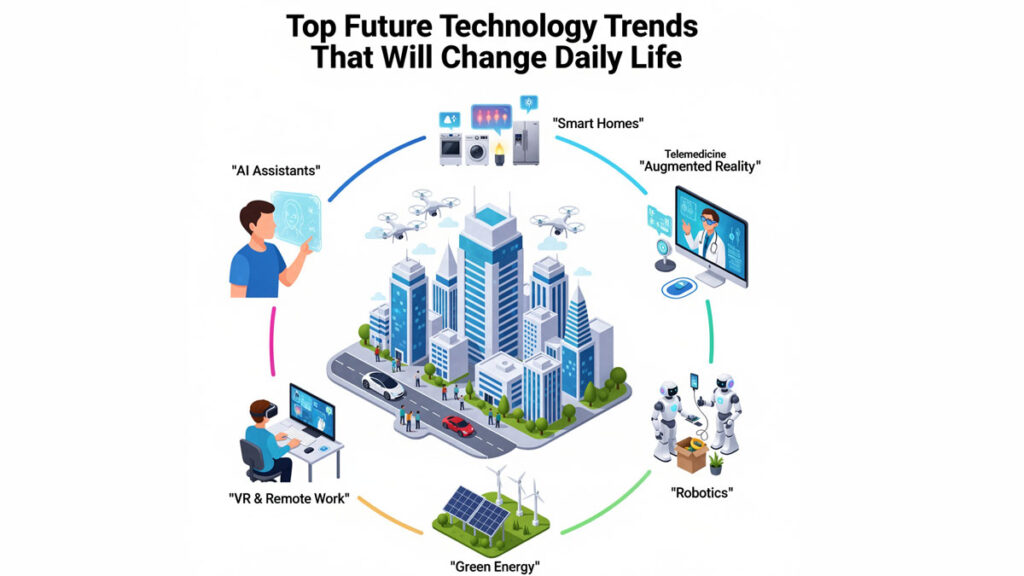
Technology is evolving faster than ever, and 2026 is shaping up to be a major turning point for how people live, work, communicate, and manage everyday tasks. From AI-powered assistants to smart homes and sustainable innovations, the next wave of technology is becoming more personal, automated, and connected.
Here are the top future technology trends expected to transform daily life in 2026 and beyond.
1. AI Assistants Becoming Everyday Digital Companions
Artificial intelligence is moving far beyond chatbots and voice commands. Modern AI assistants are becoming proactive digital companions capable of managing schedules, summarizing information, automating workflows, and even helping with decision-making.
In 2026, AI assistants are expected to:
- Handle emails and meetings automatically
- Personalize recommendations in real time
- Assist with learning and productivity
- Provide smarter customer support
- Integrate deeply with phones, cars, and smart homes
Businesses and consumers alike are relying more on AI tools to save time and improve efficiency in everyday life.
2. Smart Homes Getting Smarter
Smart home technology is becoming more intelligent, affordable, and energy-efficient. Instead of controlling devices individually, future homes will use connected ecosystems powered by AI.
Key smart home trends include:
- Voice-controlled appliances
- Automated lighting and climate systems
- AI-powered home security
- Smart kitchens and refrigerators
- Energy usage optimization
Homes of the future will learn user habits and automate tasks without manual input, improving comfort and reducing energy waste.
3. Wearable Technology Expanding Beyond Fitness
Wearables are evolving from simple fitness trackers into advanced health and lifestyle devices. Smartwatches, biometric sensors, and health-monitoring wearables are expected to become essential daily tools.
Future wearable technologies may include:
- Continuous health monitoring
- Stress and sleep tracking
- Blood pressure and glucose monitoring
- Smart clothing with embedded sensors
- Real-time wellness insights powered by AI
The healthcare industry is also increasingly adopting wearable tech for remote patient monitoring and preventive care.
4. AR Glasses Transforming Digital Interaction
Augmented reality (AR) glasses are expected to become one of the biggest consumer tech breakthroughs of the decade. Instead of looking down at phones, users may interact with digital information directly through smart glasses.
Potential everyday uses include:
- Real-time navigation overlays
- Language translation
- Virtual workspaces
- Interactive shopping experiences
- Immersive gaming and entertainment
As AR hardware becomes lighter and more affordable, it could fundamentally change how people access information throughout the day.
5. Automation Reshaping Work and Productivity
Automation technologies are streamlining repetitive tasks across industries. AI-driven systems and robotics are improving efficiency in offices, factories, retail, logistics, and customer service.
Examples of automation trends include:
- Automated data entry and reporting
- AI-generated content and design assistance
- Self-service retail systems
- Warehouse robotics
- Autonomous delivery technologies
Rather than replacing all jobs, many experts believe automation will shift human roles toward creativity, strategy, and oversight.
6. Sustainable Technology Becoming a Global Priority
Sustainability is now driving major innovation in technology. Governments, businesses, and consumers are increasingly focused on reducing environmental impact through smarter solutions.
Leading sustainable technology trends include:
- Electric vehicles and charging infrastructure
- Renewable energy systems
- Smart energy grids
- Eco-friendly manufacturing
- Energy-efficient devices and buildings
Green technology is expected to play a critical role in future urban development and climate-focused initiatives worldwide.
7. Personalized Digital Experiences Powered by AI
Technology platforms are becoming more personalized through machine learning and predictive analytics. Apps, websites, and devices now adapt content and services based on individual user behavior.
This trend is influencing:
- Online shopping recommendations
- Streaming platforms
- Digital advertising
- Education platforms
- Healthcare applications
The goal is to create faster, more relevant, and more seamless user experiences.
8. The Rise of Connected Ecosystems
Future technology is becoming increasingly interconnected. Phones, wearables, vehicles, appliances, and cloud services are working together in unified ecosystems.
Benefits of connected ecosystems include:
- Cross-device synchronization
- Seamless automation
- Better productivity
- Enhanced convenience
- Real-time data sharing
Consumers are prioritizing ecosystems that offer smooth integration between devices and services.
Final Thoughts
The future of technology in 2026 is centered around intelligence, automation, personalization, and sustainability. AI assistants, smart homes, wearables, AR glasses, and connected ecosystems are no longer futuristic concepts — they are quickly becoming part of everyday life.
As these technologies continue to evolve, they will reshape how people work, communicate, stay healthy, and interact with the digital world. Businesses and individuals that adapt early will be better positioned to benefit from the next generation of innovation.