
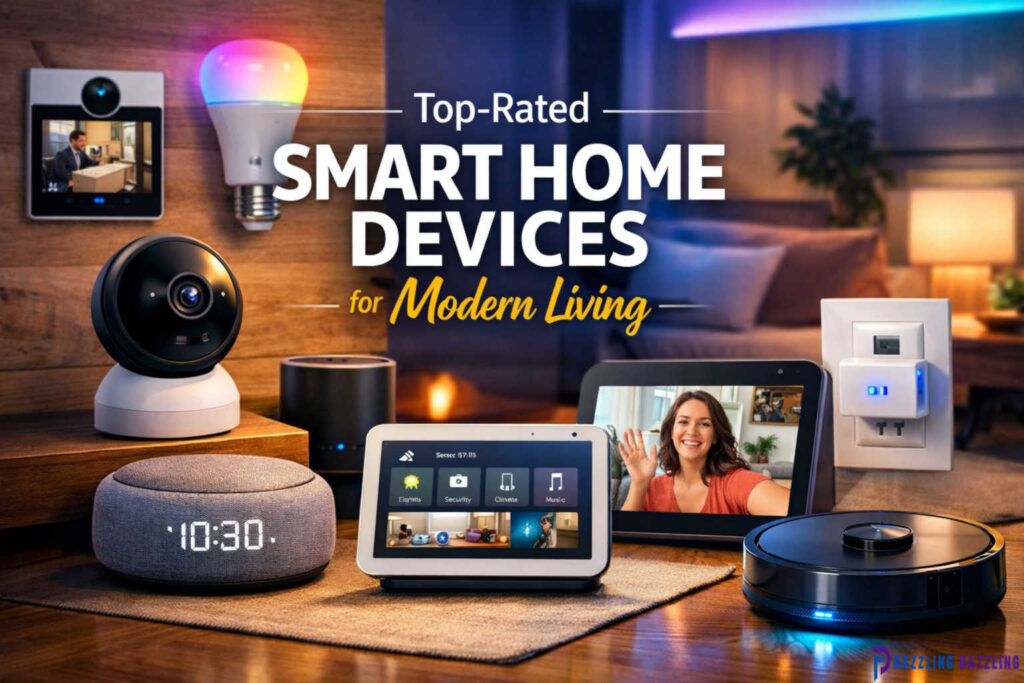
In the era of connectivity and intelligent automation, smart home devices have transitioned from luxury gadgets to practical essentials that redefine modern living. Today’s smart home technology is not just about convenience—it also enhances security, energy efficiency, comfort, health monitoring, and personalized daily support.
Whether you’re a tech enthusiast, a busy professional, or someone upgrading your living space, this comprehensive guide by Razzling Dazzling explores the top-rated smart home devices worth investing in 2026 and beyond.
Smart Hubs & Voice Assistants — The Control Center of Your Home
At the heart of every smart home is a system that coordinates all connected devices. Smart hubs and voice assistants serve as command centers, helping you monitor and control your ecosystem efficiently.
Amazon Echo Show Series
The Echo Show lineup, such as the Echo Show 8 (4th Gen), emphasizes performance, smart home integration (Matter, Zigbee, Thread), and design with a high-resolution display and powerful audio. These smart displays serve as voice assistants with Alexa and act as dashboards for routines, calendars, video calling, recipe assistance, and automation shortcuts.
Why It’s Top Rated:
- Centralizes control of connected devices
- Combines display for visual information with voice commands
- Fast, responsive performance
Google Nest Hub & Apple HomePod Mini
- Google Nest Hub provides intuitive controls with privacy-focused features.
- Apple HomePod Mini integrates seamlessly with HomeKit, ideal for Apple ecosystem users.
Smart hubs are becoming increasingly AI-driven, recommending actions such as adjusting schedules, suggesting energy savings, or tracking habits.
Smart Cleaning Machines — Hands-Free Home Maintenance
Cleaning has become automated with robot vacuums and mops, reducing time spent on chores.
Robot Vacuums & Mop Combos
Devices like the Roomba Combo j9+ lead the market with advanced mapping, obstacle recognition, self-emptying bins, and mop functions. These robots use AI to learn home layouts, schedule cleaning, avoid obstacles, and provide status updates via smartphone.
Benefits:
- Saves time and effort
- Keeps floors clean with minimal supervision
- Integrates with voice assistants
Smart Climate Control — Comfort Meets Efficiency
Smart thermostats make homes comfortable and cost-effective.
Nest Learning Thermostat
The latest Nest models learn routines and use geofencing and occupancy detection to adjust heating or cooling automatically, reducing energy bills by 10–15 percent.
Amazon Smart Thermostat
A budget-friendly option that integrates with Alexa and learns your schedule for automated adjustments and energy savings.
Smart Security — Protecting Your Home 24/7
Smart security devices use AI and analytics to distinguish threats, minimizing false alerts.
Video Doorbells
Advanced doorbells, such as the Eufy Video Doorbell S4, provide high-resolution video, wide-angle viewing, facial recognition, and integration with Alexa, Google Assistant, and Apple HomeKit.
Smart Cameras & Sensors
Devices like the Wyze Cam v4 offer clear video, night vision, and smart alerts at accessible prices. Dedicated sensors, such as glass break sensors, alert users to emergencies promptly.
Smart Locks
Modern smart locks include biometric access, wireless charging, and smart home integration. Features like palm recognition, auto-unlock, and Matter protocol support are increasingly standard.
Smart Lighting — Ambience, Efficiency, and Automation
Lighting influences comfort and mood. Smart lighting systems offer control and automation.
Philips Hue & IKEA Matter Lights
Philips Hue bulbs provide billions of colors, scheduling, and voice or app control. IKEA’s Matter-compatible lineup offers affordable bulbs, sensors, and remotes compatible with multiple ecosystems.
Creative Lighting Tools
Smart LED light strips allow mood-based lighting and synchronization with routines or music.
Practical Benefits:
- Customizable ambience
- Energy savings through automation
- Motion-activated safety lighting
Smart Plugs & Switches — Turning Any Device Smart
Not all upgrades require expensive hardware.
Smart Plugs
Smart plugs, like TP-Link Kasa, turn any appliance into a connected device, enabling scheduling, energy monitoring, and voice control.
Smart Switches
Upgrading wall switches allows automation without replacing bulbs and is ideal for whole-home setups.
Smart Sensors — Automating Awareness in Real Time
Sensors respond to environmental changes, making your home more intelligent.
Motion & Leak Sensors
- Motion sensors automate lighting and alert unusual activity.
- Water leak sensors detect issues early, preventing damage.
Automation Use Cases:
- Lights turn on when motion is detected
- Instant alerts for leaks
- Trigger alarms for suspicious activity
Smart Health & Wellness Devices
Smart devices can help monitor health at home.
Smart Scales & Air Quality Monitors
Smart scales track metrics and sync with health apps. Air quality monitors detect pollutants and humidity levels, improving indoor wellness.
Connectivity Essentials — Powerful Wi-Fi & Mesh Networks
A strong network ensures smooth smart home operation.
Mesh Wi-Fi Systems
Wi-Fi 6E/7 mesh systems from TP-Link Deco, Netgear Orbi, Linksys Velop, and Amazon Eero provide reliable coverage and support multiple devices simultaneously.
Importance:
- Ensures responsiveness
- Supports bandwidth-heavy devices
- Eliminates dead zones
Future Trends — What’s Next in Smart Home Tech
AI-Driven Automation
Devices will predict user needs, adjusting lighting, climate, and security proactively.
Matter Protocol Adoption
The Matter standard ensures better interoperability across brands, simplifying smart home setups.
Advanced Robotics & Home Helpers
Emerging robots can handle more complex household tasks, from object management to automated cleaning.
Smart Home Setup Tips
- Choose an Ecosystem First: Decide on Alexa, Google, or Apple for optimal automation.
- Start with Essentials: Begin with a smart hub, Wi-Fi mesh, and basic security.
- Plan Room-by-Room Automation: Focus on high-traffic areas first.
- Use Scenes and Routines: Automate multiple devices with routines like “Good Morning” or “Bedtime.”
Common Questions About Smart Home Devices
What is a smart home device?
A smart home device is any appliance or gadget that can connect to the internet or a home network, allowing remote control, automation, or monitoring.
Do I need a smart hub to use smart devices?
While some devices work independently, a smart hub or voice assistant helps centralize control and allows devices to work together seamlessly.
Can smart home devices save energy?
Yes. Devices like smart thermostats, lights, and plugs can automate usage and reduce electricity consumption, lowering energy bills.
Are smart security devices reliable?
Yes, modern smart cameras, doorbells, and sensors offer real-time alerts, AI detection, and integration with other devices for effective home security.
Is it difficult to set up a smart home?
Not at all. Many devices offer user-friendly apps, step-by-step instructions, and voice control, making setup simple even for beginners.
Final Thoughts on Modern Smart Living
Smart home devices enhance convenience, security, efficiency, and peace of mind. By investing in smart hubs, security systems, climate controls, lighting, sensors, and health monitoring devices, homeowners can create an adaptive, intelligent living space. Prioritizing devices based on lifestyle needs ensures maximum benefit and prepares your home for future innovations.
The smart home revolution is no longer a luxury — it is an essential part of modern living.