
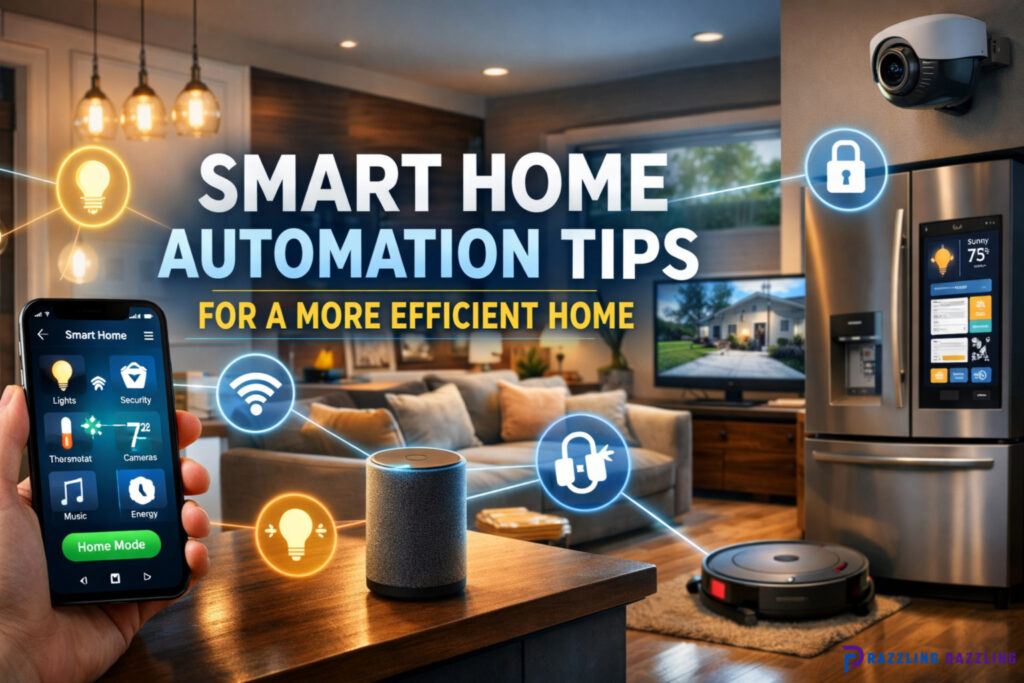
Smart home technology has transformed the way we live, making everyday life more convenient, secure, and energy-efficient. From automated lighting to intelligent climate control, home automation allows homeowners to optimize their living spaces and simplify daily routines.
In this guide, Razzling Dazzling presents practical tips and strategies to create a more efficient, comfortable, and modern smart home.
Understanding Smart Home Automation
Smart home automation refers to the integration of devices and systems in a home that can communicate with each other and be controlled remotely or automatically. These systems use Wi-Fi, Bluetooth, Zigbee, or other protocols to connect devices such as thermostats, lights, cameras, locks, and appliances.
By automating routine tasks, homeowners can save time, reduce energy consumption, improve security, and create a more seamless living experience. Some common smart home applications include:
- Lighting automation
- Climate control
- Security systems and surveillance
- Smart appliances
- Voice assistant integration
With the growing availability of affordable smart devices, achieving an efficient home has never been easier.
Benefits of Smart Home Automation
Before exploring practical tips, it is important to understand why smart home automation is worth investing in:
- Energy Efficiency
Automated thermostats, lighting, and appliances optimize energy usage, reduce waste, and lower utility bills. - Convenience and Comfort
Remote control and automation allow you to adjust lights, temperature, or appliances without moving from your spot. - Enhanced Security
Smart locks, cameras, and sensors offer real-time alerts and remote monitoring to protect your home. - Time Savings
Automated schedules for tasks like watering plants, controlling lighting, or managing appliances reduce repetitive chores. - Future-Ready Living
Smart homes integrate easily with emerging technologies, from AI assistants to IoT-enabled appliances, making your home future-proof.
Smart Home Automation Tips for Efficiency
Here are detailed strategies to maximize the efficiency of your smart home:
Automate Lighting for Energy Savings
Lighting accounts for a significant portion of home energy consumption. Automation can help reduce waste and improve convenience.
- Use Smart Bulbs: Replace traditional bulbs with smart LED bulbs that can be controlled remotely or scheduled to turn on/off.
- Set Schedules: Program lights to turn off when rooms are unoccupied or dim during evenings.
- Motion Sensors: Install motion-activated lights in hallways, bathrooms, and closets for automatic operation.
- Color and Brightness Control: Adjust lighting to match natural light patterns, enhancing comfort and reducing energy use.
Pro Tip: Integrate your lighting with voice assistants like Amazon Alexa, Google Assistant, or Apple HomeKit for effortless control.
Optimize Climate Control
Heating, ventilation, and air conditioning (HVAC) systems consume a lot of energy. Smart thermostats help maintain comfort while saving energy.
- Smart Thermostats: Devices like Nest or Ecobee learn your habits and adjust temperature settings automatically.
- Zoning: Control different areas of your home separately to avoid heating or cooling unused spaces.
- Remote Access: Adjust temperature from your phone while away to save energy without sacrificing comfort.
- Integration with Sensors: Use motion sensors to detect occupancy and adjust heating/cooling accordingly.
Pro Tip: Schedule lower heating or cooling during work hours and automatically resume when you arrive home.
Secure Your Home with Smart Devices
Home security is a top priority for homeowners. Automation enhances security and provides peace of mind.
- Smart Locks: Control access remotely, provide temporary keys to guests, and monitor entry/exit logs.
- Security Cameras: Use cameras with motion detection and cloud storage for real-time monitoring.
- Door and Window Sensors: Receive instant notifications if doors or windows are opened unexpectedly.
- Integration with Lighting: Simulate occupancy by scheduling lights to turn on/off while you are away.
Pro Tip: Combine security devices with a smart home hub to manage all alerts and access from a single app.
Automate Daily Routines with Smart Appliances
Smart appliances reduce manual effort and increase efficiency in everyday chores.
- Smart Kitchen Devices: Automated coffee makers, smart ovens, and refrigerators that monitor food inventory save time.
- Robot Vacuums and Mops: Schedule cleaning routines for floors without manual intervention.
- Smart Laundry: Wi-Fi-enabled washing machines and dryers allow you to start, pause, or monitor cycles remotely.
- Water Management: Smart irrigation systems water plants based on soil moisture and weather forecasts, conserving water.
Pro Tip: Look for appliances that integrate with your smart home ecosystem to simplify control through one platform.
Voice Assistants for Hands-Free Control
Voice assistants are central to modern smart homes, allowing convenient, hands-free operation.
- Popular Platforms: Amazon Alexa, Google Assistant, and Apple Siri.
- Capabilities: Control lights, thermostats, locks, music, and appliances with simple voice commands.
- Routines: Set up multi-step routines such as “Good Morning” to turn on lights, play news, and adjust temperature automatically.
- Interoperability: Ensure all devices are compatible with your chosen voice assistant for seamless integration.
Pro Tip: Use voice commands for frequent actions, reducing the need for manual adjustments.
Energy Monitoring for Smarter Consumption
Monitoring your energy usage helps identify waste and optimize consumption.
- Smart Plugs: Track energy use of connected devices and schedule them to turn off when not needed.
- Energy Monitoring Systems: Analyze household energy trends and adjust device usage for maximum efficiency.
- Appliance Alerts: Receive notifications when appliances are using more energy than expected.
Pro Tip: Use insights from energy monitoring to reduce utility bills and make your home more sustainable.
Centralize Control with a Smart Home Hub
A smart home hub unifies control of all devices, making management simpler and more efficient.
- Benefits: Centralized control reduces app fatigue and enhances automation.
- Popular Hubs: SmartThings, Apple HomeKit, Amazon Echo, Google Nest Hub.
- Automation Rules: Create complex routines, like “Leaving Home” to turn off lights, lock doors, and adjust thermostat automatically.
- Remote Access: Control your home from anywhere using a single app interface.
Pro Tip: Ensure all devices are compatible with your hub before purchase for a fully integrated experience.
Optimize Entertainment Systems
Smart home automation extends to entertainment, making it more convenient and immersive.
- Smart TVs and Speakers: Connect to streaming platforms and control with voice commands or smartphone apps.
- Automated Scenes: Set up “Movie Night” to dim lights, close curtains, and power on the TV automatically.
- Multi-Room Audio: Stream music seamlessly across different rooms for a connected experience.
Pro Tip: Integrate entertainment automation with routines for effortless control.
Maintenance and Updates
Efficiency also depends on keeping devices updated and well-maintained.
- Firmware Updates: Regularly update devices to access new features and security patches.
- Device Checks: Ensure sensors, cameras, and locks are functioning properly.
- Battery Management: Monitor battery-operated devices to avoid downtime.
- Connectivity Checks: Ensure Wi-Fi and hubs remain stable for uninterrupted automation.
Pro Tip: Create a monthly checklist to maintain optimal performance and efficiency.
Plan Your Smart Home Gradually
Building a fully automated home can be overwhelming, so a phased approach is recommended.
- Start Small: Begin with lighting, climate control, or security.
- Expand Gradually: Add appliances, entertainment, and energy management over time.
- Prioritize Efficiency: Focus first on devices that offer the greatest energy or time savings.
- Budget Wisely: Avoid buying too many devices at once; choose quality over quantity.
Pro Tip: Ensure future devices are compatible with your existing ecosystem to maintain smooth integration.
Common Questions About Smart Home Automation
What is the first step in setting up a smart home?
Start with a central hub or compatible devices like smart bulbs or thermostats to build a foundation for automation.
Can smart home automation save energy?
Yes, automated lighting, thermostats, and appliances significantly reduce energy waste and lower utility bills.
Are smart home devices secure?
Modern smart devices offer encryption, passwords, and two-factor authentication, but it is essential to follow best security practices.
Do I need technical knowledge to use smart home devices?
Most smart devices are user-friendly, and smartphone apps or voice assistants make control simple for beginners.
Can I control my smart home remotely?
Yes, most smart devices allow remote access via smartphone apps, enabling control from anywhere.
Final Thoughts on a More Efficient Smart Home
Smart home automation is no longer a luxury—it is a practical way to save energy, enhance security, and simplify daily routines. By combining smart lighting, climate control, security, appliances, and voice assistants, homeowners can enjoy a more efficient, comfortable, and connected living environment.
At Razzling Dazzling, we recommend planning your smart home gradually, prioritizing devices that improve energy efficiency and convenience. A well-integrated smart home not only simplifies life but also prepares your household for future technologies and sustainability goals.
With the right strategies and devices, creating a more efficient home is achievable for every homeowner, offering long-term benefits in comfort, convenience, and cost savings.