
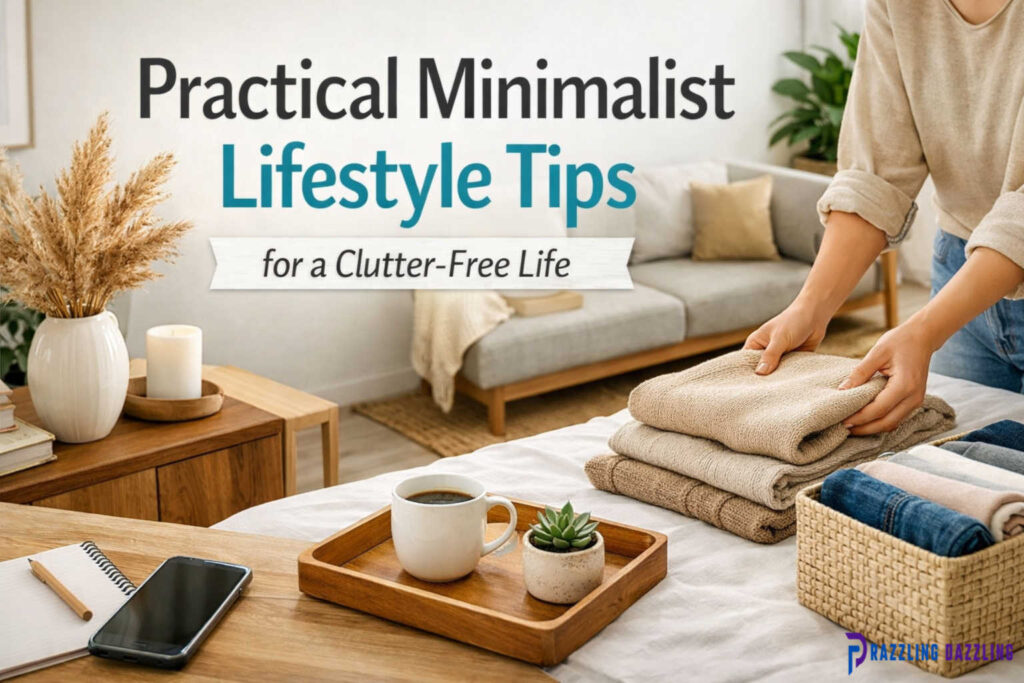
In today’s fast-paced world, many people feel overwhelmed by clutter, stress, and constant distractions. From overflowing wardrobes to packed schedules, modern life can easily become chaotic. This is why more people are embracing minimalism—a lifestyle focused on simplicity, purpose, and clarity.
A minimalist lifestyle does not mean living with nothing or giving up comfort. Instead, it means keeping only what truly adds value to your life and removing unnecessary clutter, both physically and mentally. By adopting minimalist habits, you can create a calmer environment, save money, and focus on what matters most.
In this guide by Razzling Dazzling, we will explore practical minimalist lifestyle tips that can help you enjoy a cleaner, more organized, and stress-free life.
Understanding the Minimalist Lifestyle
Minimalism is a lifestyle philosophy centered around intentional living. It encourages people to focus on quality rather than quantity and prioritize meaningful experiences over material possessions.
A minimalist life often includes:
- Owning fewer but more useful items
- Keeping living spaces organized and simple
- Avoiding unnecessary purchases
- Managing time and energy more intentionally
The goal of minimalism is not deprivation but freedom—freedom from clutter, distractions, and unnecessary stress.
When you simplify your surroundings and routines, you create more room for creativity, relationships, personal growth, and happiness.
Benefits of Living a Minimalist Life
Before exploring the practical tips, it’s helpful to understand why minimalism has become so popular around the world.
Less Stress and Anxiety
Cluttered spaces can make your mind feel overwhelmed. A clean and simple environment helps create a sense of calm and control.
More Time for What Matters
Minimalism helps eliminate unnecessary activities and distractions, giving you more time to focus on family, hobbies, and personal goals.
Better Financial Habits
When you buy fewer unnecessary items, you naturally save money and become more mindful about spending.
Easier Organization
With fewer possessions, it becomes much easier to keep your home organized and tidy.
Improved Focus and Productivity
A clutter-free environment helps improve concentration, making it easier to complete tasks efficiently.
These benefits explain why minimalist living continues to attract people seeking a more balanced and meaningful lifestyle.
Practical Minimalist Lifestyle Tips
Below are simple but powerful tips that can help you gradually adopt minimalism and enjoy a clutter-free life.
Start Decluttering One Area at a Time
Decluttering your entire home at once can feel overwhelming. Instead, start small.
Begin with one area such as:
- A drawer
- Your wardrobe
- A kitchen cabinet
- Your desk
Ask yourself a few simple questions:
- Do I use this item regularly?
- Does it add value to my life?
- Would I buy it again today?
If the answer is no, it may be time to donate, recycle, or discard it.
Taking small steps makes the process manageable and keeps you motivated.
Follow the “One In, One Out” Rule
A practical minimalist habit is the “one in, one out” rule.
Whenever you buy something new, remove one existing item from your home.
For example:
- Buy a new shirt → donate an old one
- Purchase a new kitchen tool → remove a rarely used one
This simple rule prevents clutter from accumulating again and helps maintain balance in your living space.
Create a Capsule Wardrobe
Many people own dozens of clothes but regularly wear only a few of them. A capsule wardrobe solves this problem.
A capsule wardrobe includes:
- A small number of versatile clothing pieces
- Neutral colors that match easily
- High-quality items that last longer
Benefits of a capsule wardrobe include:
- Faster daily outfit decisions
- Less closet clutter
- Reduced shopping expenses
Minimalist wardrobes focus on quality, comfort, and versatility rather than quantity.
Simplify Your Home Decor
Minimalist homes are known for their clean and peaceful design.
You don’t need to remove everything from your home. Instead, focus on intentional decoration.
Simple minimalist decor ideas include:
- Neutral color palettes
- Natural lighting
- Functional furniture
- A few meaningful decorations
Choose items that serve a purpose or bring genuine joy.
A simple, well-designed space often feels more welcoming and relaxing than a crowded one.
Reduce Digital Clutter
Clutter is not limited to physical objects. Digital clutter can also create stress.
Consider decluttering your digital life by:
- Organizing files and folders
- Deleting unused apps
- Unsubscribing from unnecessary emails
- Cleaning your phone gallery
- Limiting social media usage
A cleaner digital environment helps improve focus and productivity.
Practice Mindful Shopping
Minimalism encourages thoughtful purchasing rather than impulsive spending.
Before buying something new, ask yourself:
- Do I really need this?
- Will I use it regularly?
- Does it replace something I already own?
Waiting 24–48 hours before making a purchase can prevent unnecessary spending.
Mindful shopping helps maintain a clutter-free lifestyle while saving money.
Organize Your Daily Routine
Minimalism is not only about possessions—it also applies to time management.
Simplify your daily routine by:
- Creating a clear morning routine
- Prioritizing important tasks
- Avoiding unnecessary commitments
- Scheduling breaks and relaxation time
When your schedule becomes less crowded, your day feels more balanced and productive.
Focus on Experiences Over Possessions
One of the most powerful principles of minimalism is prioritizing experiences instead of material items.
Instead of buying more things, invest in:
- Travel experiences
- Learning new skills
- Spending quality time with loved ones
- Personal development activities
Memories and experiences often bring greater long-term happiness than possessions.
Keep Only What Adds Value
A core minimalist mindset is intentional ownership.
You should keep items that:
- Serve a clear purpose
- Improve your daily life
- Hold meaningful emotional value
If something does not serve any of these purposes, it may be unnecessary clutter.
This approach encourages mindful living and helps maintain a simplified environment.
Maintain a Daily 10-Minute Declutter Habit
Minimalism works best when it becomes a habit.
Set aside 10 minutes every day to tidy up your space.
During this time, you can:
- Put items back in their place
- Remove unnecessary objects
- Organize your desk or kitchen
- Clear surfaces
Small daily actions prevent clutter from building up again.
Practice Gratitude and Contentment
Minimalism is closely connected with gratitude.
Instead of constantly wanting more, appreciate what you already have.
Practicing gratitude can help you:
- Feel more satisfied with your life
- Reduce the desire for unnecessary purchases
- Focus on meaningful priorities
A grateful mindset makes minimalist living more fulfilling.
Build a Calm and Peaceful Living Space
Your home should feel like a place of rest and comfort.
To create a peaceful environment:
- Keep surfaces clear
- Use soft lighting
- Maintain clean and organized rooms
- Avoid unnecessary decorations
A calm space can improve mental well-being and reduce stress.
Common Myths About Minimalism
Many people misunderstand minimalist living. Let’s address a few common myths.
Myth 1: Minimalism Means Owning Almost Nothing
Minimalism is about intentional choices, not extreme deprivation.
Myth 2: Minimalism Is Only About Home Design
Minimalism applies to many areas of life including time, finances, relationships, and habits.
Myth 3: Minimalism Is Expensive
In reality, minimalism often saves money because it reduces unnecessary purchases.
Understanding these truths helps people approach minimalism in a practical and balanced way.
How to Start Your Minimalist Journey
If you want to adopt minimalism, start gradually.
A simple beginner plan could be:
Week 1: Declutter one drawer or shelf
Week 2: Clean your wardrobe
Week 3: Organize digital files
Week 4: Simplify daily routines
Over time, these small changes can transform your lifestyle and mindset.
Remember, minimalism is not a race—it is a long-term journey toward simplicity and clarity.
Frequently Asked Questions
What is a minimalist lifestyle?
A minimalist lifestyle focuses on simplicity by reducing unnecessary possessions and prioritizing meaningful experiences.
How can beginners start minimalism?
Start by decluttering small areas, reducing unnecessary purchases, and organizing daily routines.
Does minimalism mean getting rid of everything?
No. Minimalism means keeping items that serve a purpose or bring value to your life.
Can minimalism save money?
Yes. By avoiding impulsive purchases and buying fewer items, minimalism naturally helps improve financial habits.
Is minimalism suitable for families?
Absolutely. Families can adopt minimalist habits by simplifying routines, organizing spaces, and focusing on meaningful activities together.
Final Thoughts on Living a Clutter-Free Minimalist Life
Minimalism is more than just a design trend—it is a thoughtful approach to living with purpose and clarity. By reducing unnecessary clutter and focusing on what truly matters, you can create a life that feels calmer, more organized, and more fulfilling.
Simple habits such as decluttering regularly, practicing mindful shopping, and organizing your daily routine can gradually transform your environment and mindset.
At Razzling Dazzling, we believe that a minimalist lifestyle helps people focus on quality, meaningful experiences, and personal well-being rather than material excess.