
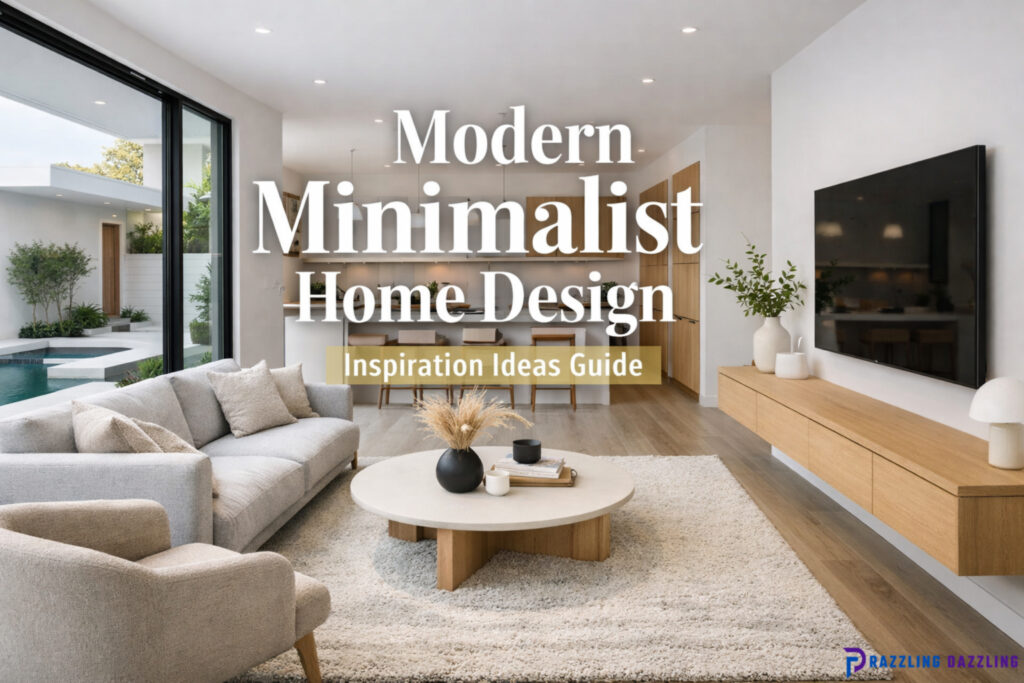
In a world filled with constant noise, clutter, and visual distractions, many homeowners are turning to modern minimalist home design as a way to create calm, functional, and aesthetically pleasing living spaces. Minimalism is more than just a style—it’s a lifestyle that emphasizes simplicity, quality over quantity, and intentional living. At Razzling Dazzling, we believe that every home can benefit from thoughtful design that combines elegance, practicality, and tranquility.
This guide explores modern minimalist home design inspiration, providing practical tips, room-by-room strategies, and innovative ideas to help you achieve a sleek, clutter-free home that reflects your personality and lifestyle.
Understanding Modern Minimalist Design
Before diving into ideas, it’s important to understand the principles behind modern minimalist design:
- Simplicity: Focus on clean lines, uncluttered spaces, and avoiding unnecessary items.
- Functionality: Every element should have a purpose, whether aesthetic or practical.
- Neutral Palette: Soft, neutral colors create a calming environment and make spaces feel larger.
- Quality over Quantity: Invest in fewer, but higher-quality pieces that last longer.
- Natural Light and Open Spaces: Open floor plans, large windows, and natural light enhance the minimalist feel.
Minimalist design isn’t about stark or cold spaces—it’s about intentional living and creating a home that feels serene and welcoming.
Color Palettes for a Modern Minimalist Home
Color plays a crucial role in minimalism. Modern minimalist homes often feature neutral tones with subtle accents:
- Whites and Off-Whites: Brighten rooms and create the illusion of more space.
- Soft Grays and Beiges: Add warmth without overwhelming the senses.
- Black Accents: Provide contrast and sophistication when used sparingly.
- Earth Tones: Soft browns, muted greens, and sandy tones bring nature indoors.
Tips:
- Stick to 3–4 main colors per room to maintain harmony.
- Add color through texture and materials, like a woven rug, wooden furniture, or linen cushions, instead of bold paints.
Furniture Selection: Minimalist and Functional
In a minimalist home, furniture should be functional, streamlined, and elegant:
Multi-Functional Furniture
- Sofa beds for guest rooms.
- Storage ottomans to hide blankets or magazines.
- Foldable desks for small spaces.
Clean Lines
Choose furniture with simple silhouettes and avoid excessive ornamentation. Sleek, modern designs work best.
Statement Pieces
While minimalism emphasizes simplicity, one or two statement pieces—like a designer chair or sculptural table—can add character without clutter.
Flooring and Surfaces
The right flooring and surfaces enhance the minimalist aesthetic:
- Hardwood Floors: Light-colored wood creates warmth and openness.
- Polished Concrete: Ideal for ultra-modern spaces with a sleek finish.
- Large Tiles: Reduce visual clutter from grout lines and create seamless surfaces.
- Matte Finishes: Matte countertops or cabinetry look clean and modern.
Walls and Art in Minimalist Spaces
Minimalist walls are calm and uncluttered, but that doesn’t mean boring:
Neutral Paint
Stick to whites, soft grays, or pastels to maintain serenity.
Art and Decor
- Use one or two large statement pieces rather than multiple small artworks.
- Consider black-and-white photography, abstract prints, or geometric designs.
Functional Decor
Shelves, hooks, and wall-mounted lighting can be both decorative and practical, keeping surfaces clear.
Lighting Ideas for Modern Minimalism
Lighting is key in minimalist design, highlighting space and simplicity:
- Natural Light: Large windows or skylights reduce the need for excessive lighting.
- Recessed Lighting: Hidden ceiling lights create a clean look.
- Pendant Fixtures: Sleek, geometric pendants can act as functional art.
- Task Lighting: Simple table or floor lamps for reading areas maintain focus and clarity.
Decluttering and Storage Solutions
A modern minimalist home is functional because it’s uncluttered. Smart storage is essential:
Built-In Cabinets
Hidden storage behind seamless doors maintains a sleek look.
Vertical Storage
Use wall-mounted shelves and hooks to free up floor space.
Multi-Use Furniture
Ottomans, benches, and tables with storage compartments reduce visible clutter.
Daily Habits
Adopt routines like “one-in, one-out” for household items to maintain minimalism long-term.
Room-by-Room Inspiration
Living Room
- Neutral sofas with simple lines.
- Coffee tables with hidden storage.
- Minimal decorative items like a single vase or sculpture.
Kitchen
- Streamlined cabinets with handleless designs.
- Integrated appliances for a seamless look.
- Neutral backsplashes and countertops.
- Open shelves with only essential items.
Bedroom
- Low-profile bed frames.
- Minimal bedside tables.
- Neutral bedding and soft textures.
- Storage under the bed for a clean floor.
Bathroom
- Wall-mounted sinks or vanities.
- Frameless mirrors.
- Concealed storage behind cabinet doors.
- Minimal accessories for a spa-like feel.
Home Office
- Simple desks with cable management.
- Shelves only for essentials.
- Natural light and ergonomic chairs to promote focus.
Textures and Materials in Minimalist Design
Minimalism isn’t about flat or cold surfaces—it’s about subtle textures and natural materials:
- Wood: Adds warmth to neutral spaces.
- Stone and Marble: Perfect for countertops or accent walls.
- Metal Accents: Brushed gold, black, or stainless steel for furniture legs or fixtures.
- Fabrics: Linen, cotton, or wool for cushions, throws, and rugs add softness.
Minimalist Accessories and Decor
The key to minimalist decor is restraint and intentionality:
- Plants: Small potted plants or succulents add life without clutter.
- Mirrors: Reflect light and make rooms feel larger.
- Vases or Sculptures: Use sparingly to maintain focus.
- Functional Decor: Items like stylish trays, clocks, or organizers can enhance beauty and utility.
Outdoor and Balcony Minimalism
Minimalism extends beyond interiors:
- Simple patio furniture with clean lines.
- Potted plants instead of large arrangements.
- Neutral outdoor rugs and minimal lighting to create a serene outdoor retreat.
Incorporating Technology in Minimalist Homes
Technology can enhance minimalist living without adding clutter:
- Smart Home Systems: Control lighting, security, and appliances from a single device.
- Wireless Devices: Reduce the mess of cables and unnecessary hardware.
- Hidden Speakers: Built-in audio solutions maintain a clean aesthetic.
- Automated Blinds and Thermostats: Streamline daily tasks and reduce visual clutter.
Sustainable Minimalism
Modern minimalism often aligns with sustainability:
- Eco-Friendly Materials: Bamboo flooring, recycled wood furniture, and organic textiles.
- Energy Efficiency: LED lighting, solar panels, and smart thermostats.
- Mindful Consumption: Purchase fewer, higher-quality items instead of cheap, disposable products.
Maintaining a Minimalist Home
Consistency is key to long-term minimalism:
- Regular Decluttering: Review possessions every season.
- Mindful Shopping: Only buy what you truly need.
- Daily Organization Habits: Return items to their designated spots.
- Family Participation: Encourage everyone in the household to respect minimalist principles.
Modern Minimalist Design Inspiration Ideas: Quick Tips
- Stick to a neutral, cohesive color palette.
- Choose furniture that balances style and function.
- Embrace natural light and open spaces.
- Use texture and materials to add warmth.
- Keep accessories minimal and intentional.
- Incorporate smart storage to hide clutter.
- Add plants and natural elements for life and freshness.
- Use technology to simplify daily tasks.
Smart Home Minimalism FAQs
What is modern minimalist home design?
A design style focused on simplicity, functionality, neutral colors, and uncluttered spaces.
Can small homes use minimalist design?
Yes! Minimalism maximizes space and creates the illusion of openness, perfect for small homes.
How do I keep my minimalist home from feeling cold?
Add warmth with textures, natural materials, plants, and subtle accent colors.
Is minimalist design expensive to implement?
Not necessarily. Focus on quality over quantity and repurpose existing items creatively.
How do I maintain minimalism long-term?
Regular decluttering, mindful purchasing, and family participation help sustain a minimalist home.
Wrap-Up: Make Your Home a Minimalist Sanctuary
Modern minimalist home design is about more than clean lines and neutral colors—it’s a lifestyle that emphasizes intentionality, simplicity, and peace of mind. By incorporating these design ideas and inspiration from Razzling Dazzling, you can create a home that feels spacious, functional, and beautifully serene. Minimalism encourages living with less but enjoying more, allowing you to focus on what truly matters.
A minimalist home isn’t achieved overnight. Start small, stay consistent, and gradually implement these ideas room by room. With thoughtful planning and dedication, your home can become a sanctuary of modern elegance, efficiency, and comfort.