
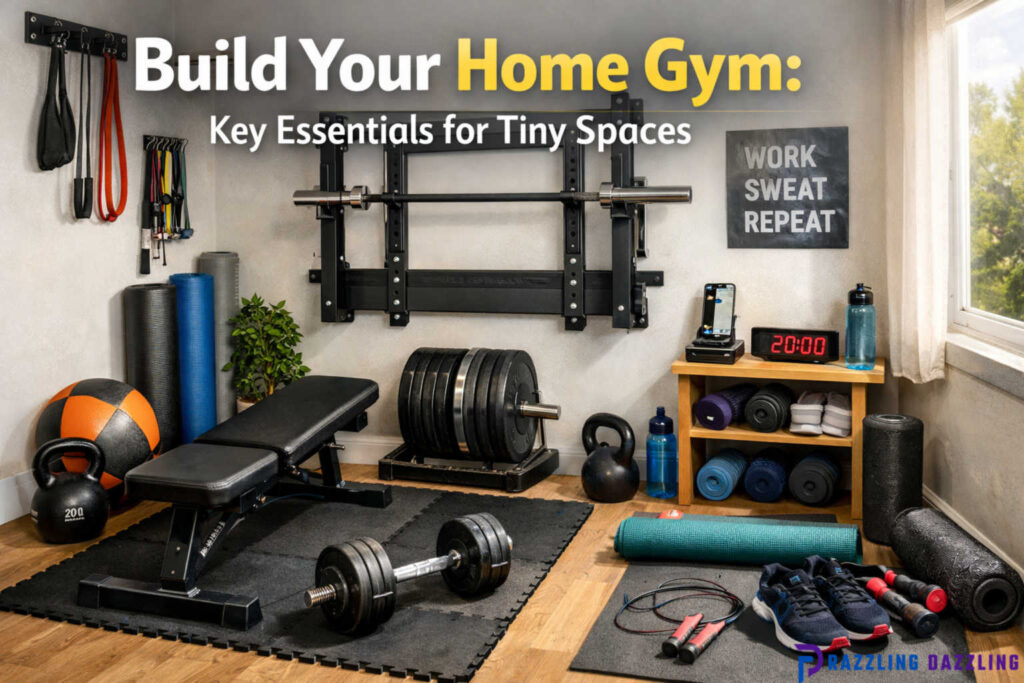
Creating a home gym used to mean dedicating an entire room to bulky machines and heavy equipment. In 2026, that’s no longer necessary. With smart planning and the right tools, you can build a powerful, effective home gym even in the smallest apartment, studio, or spare corner.
At Razzling Dazzling, we believe fitness should be accessible, practical, and space-efficient. This comprehensive guide will show you how to design a compact home gym, choose the right essentials, avoid common mistakes, and maximize every square foot.
Why Build a Home Gym in a Small Space?
Tiny spaces shouldn’t stop you from reaching your fitness goals. In fact, a compact home gym offers several advantages:
- Saves time (no commute to the gym)
- Saves money long-term
- Offers privacy and convenience
- Encourages consistency
- Customizable to your fitness style
When designed properly, a small home gym can support strength training, cardio, flexibility, and recovery — without clutter.
Step 1: Evaluate Your Space Strategically
Before buying equipment, assess your available space carefully.
Measure Everything
- Floor area
- Ceiling height
- Wall clearance
- Storage potential
Even a 4 ft x 6 ft area can work if planned properly.
Choose the Best Location
Ideal options include:
- Bedroom corner
- Living room edge
- Balcony (if safe and covered)
- Underutilized hallway space
- Fold-away section in a multipurpose room
Consider Noise and Flooring
In apartments, impact noise matters. Add:
- Rubber mats
- Foam tiles
- Yoga mats
- Carpet padding
Proper flooring protects both your joints and your downstairs neighbors.
Step 2: Focus on Multi-Functional Equipment
In small spaces, versatility is everything. Each item should serve multiple purposes.
Adjustable Dumbbells
Instead of buying multiple fixed-weight dumbbells, adjustable versions save space and provide flexibility.
Benefits:
- Replace entire dumbbell rack
- Suitable for progressive overload
- Easy storage
Ideal for:
- Upper body workouts
- Lower body training
- Core exercises
Resistance Bands
One of the most space-efficient tools available.
Why they’re essential:
- Extremely compact
- Affordable
- Offer scalable resistance
- Great for warm-ups and rehab
They can simulate:
- Rows
- Chest presses
- Squats
- Deadlifts
- Shoulder exercises
Resistance bands are perfect for beginners and advanced users alike.
Foldable Workout Bench
A foldable bench dramatically expands exercise options without permanently taking up space.
Use it for:
- Chest presses
- Step-ups
- Bulgarian split squats
- Core work
Choose one that:
- Folds flat
- Has adjustable incline
- Supports sufficient weight capacity
Store it under a bed or against a wall when not in use.
Adjustable Kettlebell
Kettlebells are incredibly versatile.
You can perform:
- Swings
- Goblet squats
- Cleans
- Presses
- Turkish get-ups
An adjustable kettlebell saves space and allows gradual progression.
Step 3: Smart Cardio Solutions for Tiny Spaces
Cardio equipment is usually bulky, but modern designs solve this issue.
Jump Rope
A classic, high-efficiency cardio tool.
Benefits:
- Minimal space required
- High calorie burn
- Portable
Ensure you have sufficient ceiling clearance.
Foldable Treadmill
Many brands now offer slim, foldable treadmills that slide under furniture.
Look for:
- Quiet motor
- Shock absorption
- Compact fold design
Under-Desk Elliptical or Bike Pedal
Perfect for:
- Small apartments
- Desk workers
- Low-impact cardio
They store easily and require minimal footprint.
Step 4: Wall and Vertical Storage Solutions
Vertical space is your best friend in tiny gyms.
Wall-Mounted Racks
Store:
- Resistance bands
- Jump ropes
- Light dumbbells
Floating Shelves
Use shelves for:
- Foam rollers
- Yoga blocks
- Towels
Pegboards
A pegboard system keeps equipment organized and accessible without cluttering the floor.
Organization improves motivation and keeps the space functional.
Step 5: Core Essentials You Should Not Skip
Regardless of space size, some foundational items are crucial.
High-Quality Workout Mat
A durable mat protects flooring and provides comfort for:
- Stretching
- Core workouts
- Mobility sessions
- Bodyweight exercises
Choose:
- Non-slip surface
- Adequate thickness
- Easy cleaning material
Foam Roller
Recovery is often ignored but essential.
Foam rolling helps:
- Reduce muscle tightness
- Improve flexibility
- Enhance recovery
It takes minimal storage space and delivers major benefits.
Pull-Up Bar (Doorway Style)
A doorway pull-up bar requires no permanent installation.
Supports:
- Pull-ups
- Hanging leg raises
- Core training
Ensure the door frame is compatible and sturdy.
Designing an Efficient Workout Flow
A tiny home gym should feel functional, not cramped.
Follow these layout principles:
- Keep the center floor area clear.
- Store equipment vertically.
- Choose foldable or stackable items.
- Avoid overbuying equipment.
Your space should allow:
- Full body movement
- Safe lifting
- Stretching without obstruction
Budget Planning for Small Home Gyms
You do not need expensive machines to get results.
Budget-Friendly Starter Setup
- Resistance bands
- Jump rope
- Workout mat
- Adjustable dumbbells
This setup covers strength and cardio effectively.
Mid-Range Setup
Add:
- Foldable bench
- Adjustable kettlebell
- Pull-up bar
Premium Compact Setup
Include:
- Foldable treadmill
- Smart fitness mirror
- Compact storage solutions
Choose based on your goals and long-term commitment.
Common Mistakes to Avoid
Buying Too Much Equipment
More gear does not mean better workouts. Focus on essentials.
Ignoring Storage Planning
Clutter reduces motivation and increases injury risk.
Choosing Oversized Machines
Always measure before purchasing.
Skipping Recovery Tools
Mobility and recovery are as important as strength training.
Not Defining Fitness Goals
Know whether you prioritize:
- Fat loss
- Muscle gain
- Endurance
- General wellness
Your goals should guide purchases.
Smart Technology for Small Home Gyms
Technology enhances small-space workouts without requiring large machines.
Options include:
- Fitness apps
- Virtual personal trainers
- Smart watches
- Bluetooth heart rate monitors
- Compact smart mirrors
These tools maximize training efficiency without occupying floor space.
Creating Motivation in a Small Space
Even a tiny gym should inspire you.
Consider:
- Good lighting
- A motivational quote
- Clean layout
- A mirror to monitor form
- A small speaker for music
A visually clean and organized space encourages consistency.
Sample Weekly Workout Plan for Tiny Spaces
Here’s a simple structure:
Day 1: Upper Body Strength
- Dumbbell presses
- Rows
- Shoulder presses
- Push-ups
Day 2: Lower Body
- Goblet squats
- Lunges
- Kettlebell swings
- Calf raises
Day 3: Cardio + Core
- Jump rope intervals
- Plank variations
- Russian twists
- Mountain climbers
Day 4: Mobility and Recovery
- Stretching
- Foam rolling
- Light resistance band work
Repeat cycle and increase intensity gradually.
Long-Term Maintenance Tips
- Clean equipment weekly
- Tighten bolts regularly
- Replace worn resistance bands
- Track workout progress
- Upgrade only when necessary
Keep your gym evolving with your fitness level.
Common Questions About Building a Tiny Home Gym
Can I get a full-body workout in a small space?
Yes! With compact equipment like resistance bands, adjustable dumbbells, and a foldable bench, you can target all major muscle groups.
What is the best cardio option for tiny spaces?
Jump ropes, under-desk ellipticals, and foldable treadmills provide effective cardio without taking up much room.
How much should I invest in a small home gym?
Start with a budget-friendly setup including a mat, dumbbells, and resistance bands. Upgrade gradually as needed.
How do I keep my small gym organized?
Use vertical storage, wall-mounted racks, shelves, and foldable equipment to maximize floor space.
Do I need expensive machines to see results?
Not at all. Multi-functional, compact equipment combined with a structured workout plan can deliver excellent results.
Final Thoughts
Building a home gym in a tiny space is not about cramming equipment into a corner. It is about smart choices, multi-functional tools, and efficient layout design.
With thoughtful planning, even a small apartment can support full-body workouts, strength gains, cardio sessions, and recovery routines.
At Razzling Dazzling, we believe fitness should fit your life — not require extra rooms or expensive memberships. Start simple, stay consistent, and let your compact home gym grow with you.