
A clutter-free space isn’t just about aesthetics—it’s about creating an environment that supports clarity, productivity, and peace of mind. For beginners, decluttering can feel overwhelming, especially when years of accumulated items are involved. The good news is that you don’t need to overhaul your entire home overnight. With simple and practical strategies, you can gradually transform your living space and enjoy the benefits of a fresh start.
At Razzling Dazzling, we believe that decluttering is more than just cleaning—it’s a lifestyle shift that helps you focus on what truly matters. This guide will walk you through easy, beginner-friendly ideas to help you get started and stay consistent.
Understanding the Importance of Decluttering
Before diving into techniques, it’s helpful to understand why decluttering matters. A cluttered space often leads to a cluttered mind. When your surroundings are disorganized, it can increase stress, reduce focus, and make even simple tasks feel overwhelming.
Decluttering helps you:
- Save time by finding things easily
- Reduce stress and mental fatigue
- Improve productivity and efficiency
- Create a more welcoming and comfortable home
- Develop mindful consumption habits
When you shift your mindset from “getting rid of things” to “creating space for a better life,” decluttering becomes more meaningful and motivating.
Start Small and Stay Consistent
One of the biggest mistakes beginners make is trying to declutter everything at once. This often leads to burnout and unfinished projects. Instead, start small.
Choose a single drawer, shelf, or corner of a room. Set a timer for 15 to 30 minutes and focus only on that space. Completing a small task gives you a sense of accomplishment and motivates you to continue.
Consistency is more important than intensity. Decluttering a little every day is far more effective than attempting a massive clean-up once a month.
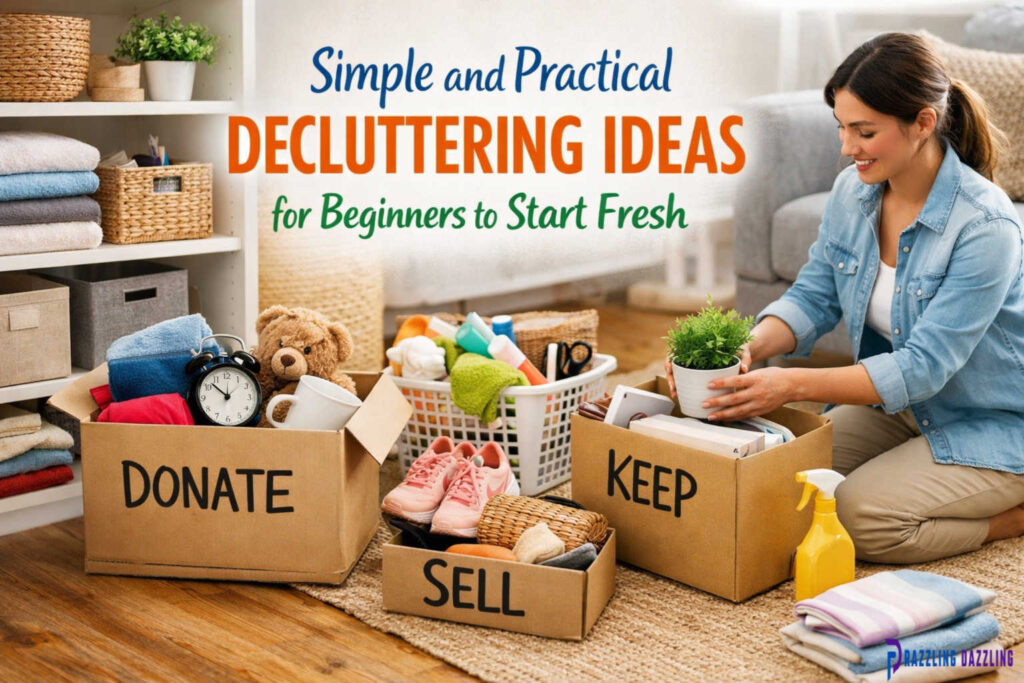
Use the “Keep, Donate, Discard” Method
A simple sorting system can make decision-making easier. As you go through your belongings, divide them into three categories:
- Keep: Items you use regularly or truly love
- Donate: Items in good condition that others can use
- Discard: Broken, expired, or unusable items
This method removes the guesswork and helps you make quick decisions. If you’re unsure about something, ask yourself: “Have I used this in the past year?” If not, it may be time to let it go.
Declutter by Category, Not by Room
Instead of tackling one room at a time, try decluttering by category. For example, gather all your clothes, books, or kitchen items in one place. This allows you to see how much you actually own and makes it easier to identify duplicates or unnecessary items.
Start with categories that are easier to manage, such as clothing or paperwork, before moving on to sentimental items.
Apply the One-Year Rule
The one-year rule is a simple guideline: if you haven’t used an item in the past year, you probably don’t need it. This rule works well for clothes, gadgets, and household items.
Of course, exceptions can be made for seasonal or special-purpose items, but in most cases, this rule helps eliminate clutter quickly.
Create a Decluttering Routine
Decluttering shouldn’t be a one-time activity. To maintain a clean and organized space, build it into your routine.
You can:
- Spend 10 minutes each day tidying up
- Do a weekly reset of common areas
- Schedule monthly decluttering sessions for specific categories
A routine prevents clutter from building up again and keeps your home consistently organized.
Adopt the “One In, One Out” Rule
To avoid accumulating new clutter, follow the “one in, one out” rule. Whenever you bring something new into your home, remove one existing item.
For example, if you buy a new shirt, donate or discard an old one. This habit helps maintain balance and encourages mindful purchasing.
Organize as You Declutter
Decluttering and organizing go hand in hand. Once you’ve reduced the number of items, it becomes easier to organize what’s left.
Use simple storage solutions like:
- Clear containers for visibility
- Drawer dividers for small items
- Labels to keep things in place
Remember, organization doesn’t have to be expensive. Repurpose items you already have to create functional storage systems.
Let Go of Sentimental Clutter
One of the hardest parts of decluttering is dealing with sentimental items. These could be gifts, old photos, or items tied to memories.
Instead of keeping everything, choose a few meaningful pieces that truly represent your memories. You can also take photos of items before letting them go, preserving the memory without keeping the physical object.
Declutter Your Digital Space
Clutter isn’t limited to physical items. Digital clutter can also affect your productivity and mental clarity.
Take time to:
- Delete unnecessary files and emails
- Organize documents into folders
- Uninstall unused apps
- Clear your desktop or home screen
A clean digital environment can make your work more efficient and reduce distractions.
Make Decluttering Enjoyable
Decluttering doesn’t have to feel like a chore. Turn it into a positive experience by:
- Playing your favorite music
- Setting small rewards for completed tasks
- Involving family members or friends
- Tracking your progress
When you associate decluttering with positive feelings, you’re more likely to stick with it.
Focus on Functionality
When deciding what to keep, prioritize functionality. Ask yourself whether an item serves a purpose in your daily life.
Items that are rarely used or don’t add value can often be removed. Keeping only functional and meaningful items helps create a more efficient and enjoyable living space.
Avoid Perfectionism
Many beginners get stuck trying to achieve a perfectly organized home. This can slow down progress and lead to frustration.
Instead, focus on improvement rather than perfection. Even small changes can make a big difference over time. A decluttered space doesn’t have to look like a magazine—it just needs to work for you.
Involve the Whole Family
If you live with others, decluttering becomes easier when everyone participates. Encourage family members to take responsibility for their own belongings.
You can:
- Set shared decluttering goals
- Assign specific areas to each person
- Make it a fun group activity
This not only speeds up the process but also helps maintain a clutter-free home.
Handle Paper Clutter Effectively
Paper clutter can pile up quickly if not managed properly. Bills, receipts, and documents often create unnecessary mess.
To stay organized:
- Go paperless whenever possible
- Use a filing system for important documents
- Recycle or shred unnecessary papers regularly
Keeping paper clutter under control prevents it from taking over your space.
Create a “Maybe Box”
If you’re unsure about certain items, place them in a “maybe box.” Store the box out of sight and revisit it after a few weeks or months.
If you haven’t needed anything from the box during that time, it’s a good sign that you can let those items go.
Celebrate Progress, Not Just Results
Decluttering is a journey, not a destination. Celebrate your progress along the way, no matter how small.
Whether it’s clearing a drawer or organizing a shelf, every step brings you closer to a more peaceful and organized home.
Maintain Your Clutter-Free Space
Once you’ve decluttered, the next challenge is maintaining your space. Simple habits can help you stay organized:
- Put items back after use
- Avoid impulse purchases
- Regularly review your belongings
- Keep surfaces clear
Consistency is key to preventing clutter from returning.
Benefits of a Decluttered Life
As you continue your decluttering journey, you’ll begin to notice positive changes beyond your physical space.
You may experience:
- Increased focus and productivity
- Better time management
- Reduced stress and anxiety
- Improved overall well-being
A decluttered home often leads to a more balanced and fulfilling life.
Common Questions About Decluttering for Beginners
What is the easiest way to start decluttering for beginners?
Start with a small area like a drawer or shelf and use the “keep, donate, discard” method to make quick decisions.
How often should I declutter my home?
It’s best to declutter regularly—spend a few minutes daily and do a deeper session once a month.
What should I do with items I no longer need?
Donate usable items, recycle what you can, and responsibly discard anything that’s broken or unusable.
How do I deal with emotional or sentimental items?
Keep only the most meaningful pieces and consider taking photos of others to preserve memories without keeping clutter.
How can I prevent clutter from coming back?
Follow habits like the “one in, one out” rule, avoid impulse buying, and return items to their proper place after use.
Starting your decluttering journey may seem challenging, but with simple and practical steps, it becomes manageable and even enjoyable. The key is to begin small, stay consistent, and focus on creating a space that supports your lifestyle.
At Razzling Dazzling, we encourage you to embrace decluttering as a way to refresh not just your home, but your mindset as well. By letting go of what no longer serves you, you make room for new opportunities, clarity, and peace.
Remember, every small effort counts. Start today, take it one step at a time, and enjoy the transformation toward a simpler, more organized life.