
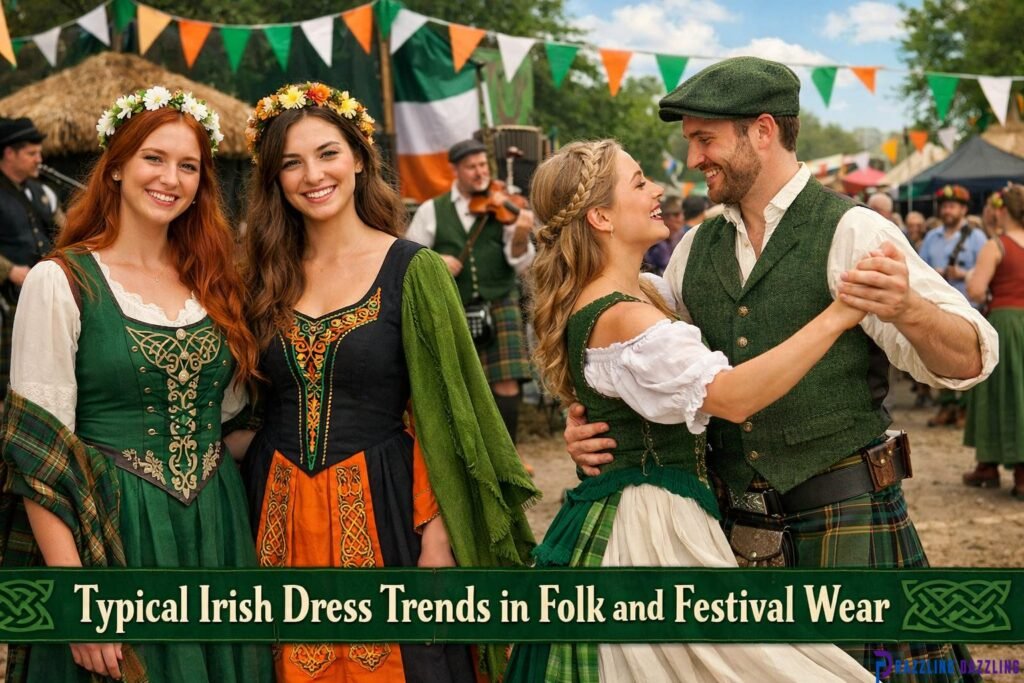
Ireland’s traditional clothing tells a powerful story of heritage, resilience, and artistry. From Celtic knots stitched into wool cloaks to the swirling skirts of Irish dance dresses, Irish folk and festival wear blends centuries-old tradition with modern creativity. Today, these iconic styles are celebrated at St. Patrick’s Day parades, music festivals, heritage fairs, and cultural events around the world.
At Razzling Dazzling, we love exploring how timeless fashion traditions continue to inspire modern wardrobes. In this in-depth guide, you’ll discover the origins, elements, and evolving trends of typical Irish dress in folk and festival wear.
The Roots of Traditional Irish Clothing
Irish traditional dress developed from practical needs shaped by weather, rural lifestyles, and limited resources. Early garments were designed to withstand harsh winds, cold rains, and rugged terrain. Natural fibers such as wool and linen dominated, often dyed with local plants.
Over time, clothing became more decorative, reflecting social class, region, and cultural pride. Celtic patterns, embroidery, and handwoven textures emerged as powerful visual symbols of Irish identity.
The Iconic Aran Sweater
History of the Aran Jumper
The Aran sweater originated from the Aran Islands off Ireland’s west coast. Fishermen wore these thick, hand-knit jumpers to stay warm at sea.
Signature Features
- Cable stitches symbolizing fishermen’s ropes
- Diamond patterns representing wealth and success
- Basket stitches meaning a good catch
Modern Use in Festivals
Today, Aran sweaters are a staple at Irish folk festivals, paired with skirts, boots, or layered over dresses for a cozy traditional look.
The Irish Cloak: The Brat
The traditional Irish cloak, or brat, was worn by both men and women.
Characteristics
- Made from heavy wool
- Hooded or draped over the shoulders
- Often fastened with a Celtic brooch
Festival Trend
At heritage fairs and reenactment festivals, cloaks are making a comeback. Many designs now use lighter fabrics for easier wear while keeping the historical silhouette.
Dresses in Irish Folk Culture
The Early Peasant Dress
Irish women traditionally wore long wool or linen dresses with aprons. These outfits were practical and modest, suitable for farm life and village gatherings.
Evolution Into Festival Wear
Modern Irish folk dresses feature:
- Fitted bodices
- Flared skirts
- Celtic embroidery
- Earthy colors like green, brown, burgundy, and cream
We draw inspiration from these flowing silhouettes when designing contemporary cultural dresses.
The Influence of Irish Dance Costumes
Traditional Step Dancing Dresses
Irish dance costumes are some of the most recognizable forms of Irish attire.
- Short, stiff skirts
- High necklines
- Intricate knotwork embroidery
- Bold colors and sparkling details
Festival Impact
These eye-catching dresses are now worn beyond competitions, appearing at parades, concerts, and cultural shows.
Kilts and Trousers in Irish Tradition
Although kilts are more strongly associated with Scotland, Ireland has its own version of traditional pleated garments.
Léine and Trews
- Léine – A long tunic-style shirt worn by men
- Trews – Tight-fitting trousers made from wool
At folk festivals, men often wear modern kilts or tailored trousers paired with waistcoats and flat caps for a vintage Irish look.
Accessories That Complete the Look
Celtic Jewelry
- Claddagh rings symbolizing love and loyalty
- Celtic knot pendants
- Tara brooch replicas
Headwear
- Flat caps for men
- Floral crowns or lace headpieces for women
Footwear
- Leather boots
- Traditional ghillies for dancers
Fabrics and Colors in Irish Festival Fashion
Common Fabrics
- Wool
- Tweed
- Linen
- Velvet for formal festival attire
Popular Colors
- Emerald green
- Moss and forest shades
- Cream and beige
- Deep navy and burgundy
These earthy tones echo Ireland’s natural landscapes.
Modern Irish Festival Trends
Irish folk fashion has embraced modern tailoring while preserving tradition.
Fusion Styles
- Traditional bodices with modern skirts
- Aran sweaters styled with jeans
- Cloaks layered over contemporary dresses
Sustainable Fashion
Many designers now prioritize eco-friendly materials, reflecting Ireland’s deep connection to nature.
Irish Dress at St. Patrick’s Day Celebrations
St. Patrick’s Day is the ultimate showcase for Irish folk fashion.
- Women wear green dresses with Celtic embroidery
- Men sport tweed vests, flat caps, and kilts
- Children wear playful leprechaun-inspired outfits
We celebrate how this festival turns heritage fashion into a joyful global event.
Irish Folk Wear for Weddings and Ceremonies
Modern Irish weddings increasingly include traditional elements:
- Brides wear Celtic-inspired lace gowns
- Grooms choose tweed suits with Irish motifs
- Bridesmaids wear emerald dresses with knot embroidery
These elegant touches add cultural depth to celebrations.
Regional Variations Across Ireland
Each region brings subtle differences to traditional wear:
- Connemara – Heavy wool cloaks and shawls
- Donegal – Tweed patterns and earthy tones
- Munster – Embroidered bodices and layered skirts
Festivals often showcase these regional identities.
Styling Irish Folk Wear Today
You don’t need to attend a heritage fair to enjoy Irish folk fashion.
Everyday Styling Tips
- Pair an Aran sweater with a midi skirt
- Add Celtic jewelry to a simple outfit
- Wear tweed jackets with modern trousers
These small touches keep the spirit alive year-round.
What Makes Our Flying Dresses Inspired by Tradition
While we are known for modern fashion, Razzling Dazzling often draws subtle inspiration from Irish folk elements:
- Flowing silhouettes inspired by cloaks
- Earthy color palettes
- Embroidery reflecting Celtic art
This blend of heritage and modern style defines our design philosophy.
Why Traditional Irish Dress Still Matters
Irish folk fashion is not just about clothing—it’s about storytelling. Every stitch, pattern, and fabric choice carries meaning from the past. Festivals and folk events ensure that these traditions are not forgotten but celebrated by new generations.
Common Questions About Irish Folk and Festival Wear
What fabrics are commonly used in traditional Irish clothing?
Wool, tweed, linen, and velvet are the most popular traditional fabrics.
Are Irish dance dresses worn outside competitions?
Yes, they are often seen at parades, folk festivals, and cultural events.
What colors represent Irish folk fashion best?
Emerald green, earthy browns, cream, navy, and burgundy are classic choices.
Can Irish folk wear be styled for modern outfits?
Absolutely! Aran sweaters, tweed jackets, and Celtic jewelry blend well with everyday fashion.
Why is Irish traditional dress still popular today?
Because it connects people to Irish heritage while remaining stylish and meaningful.
Wrapping Up the Irish Folk Fashion Story
Traditional Irish dress has evolved from humble rural garments into vibrant festival fashion admired around the world. Whether it’s the warmth of an Aran sweater, the elegance of a Celtic-embroidered dress, or the bold beauty of Irish dance costumes, these styles continue to inspire.
At Razzling Dazzling, we honor these cultural influences by blending timeless heritage with contemporary design—keeping tradition alive through fashion.