
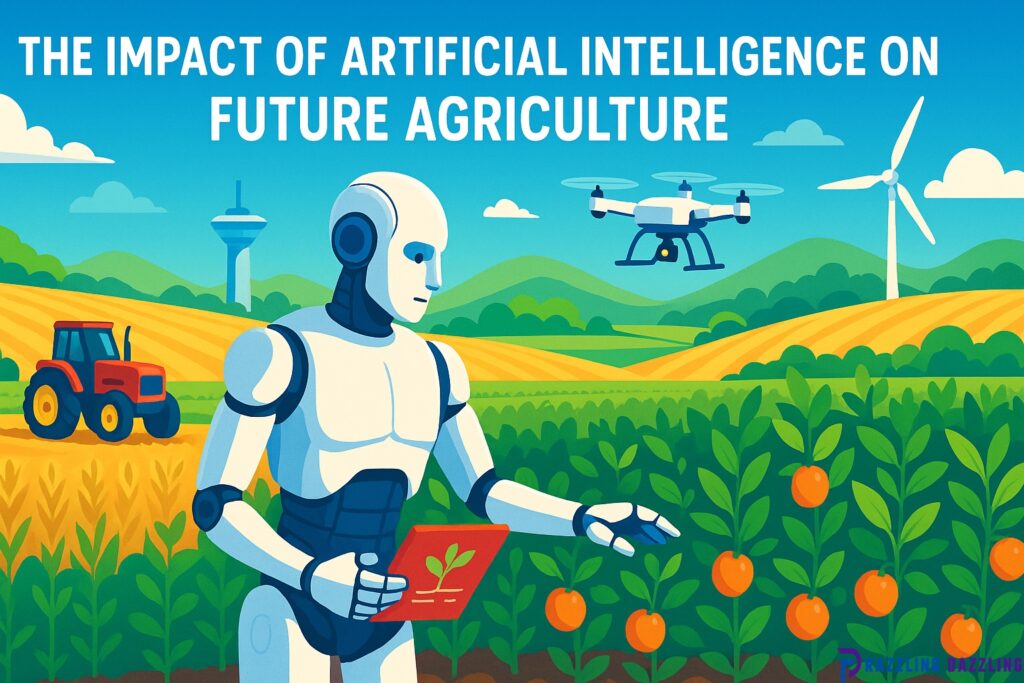
Agriculture—the backbone of human civilization—is undergoing an unprecedented technological transformation. As global populations rise, climate challenges intensify, and natural resources become strained, traditional farming methods are no longer enough to meet future food needs. This is where Artificial Intelligence (AI) emerges as the most powerful tool revolutionizing modern agriculture.
At Razzling Dazzling, we believe AI will shape the future of farming by boosting productivity, reducing labor, improving sustainability, and ensuring food security for generations to come. This comprehensive guide explores exactly how AI is transforming agriculture and what the future holds for farms across the world.
Understanding AI in Modern Agriculture
Artificial Intelligence refers to machines and systems that can perform tasks requiring human-like intelligence—such as learning, analyzing data, making decisions, and predicting outcomes.
In agriculture, AI integrates with advanced tools like:
- Smart sensors
- Drones
- Robotics
- Machine learning algorithms
- Predictive analytics
- IoT (Internet of Things) devices
- Autonomous tractors
- Satellite imaging
Together, these technologies create smarter, more efficient, and more sustainable farms.
The Growing Importance of AI in Agriculture
Agriculture is evolving rapidly due to several global challenges:
- Rising population demand: The world needs 70% more food by 2050.
- Labor shortages: Fewer young people are entering farming.
- Climate change: Extreme weather affects yields and crop health.
- Soil degradation: Fertility continues to decline worldwide.
- Water scarcity: Smart irrigation is becoming essential.
AI addresses these challenges by making farming more precise, data-driven, and automated.
AI-Powered Precision Farming
Precision agriculture is one of the biggest breakthroughs enabled by AI.
What Is Precision Agriculture?
It refers to farming practices that use real-time data to apply the right amount of resources—such as water, fertilizer, and pesticides—only where needed.
AI in Precision Agriculture
AI systems analyze data from sensors, drones, and satellites to guide farming decisions. This helps farmers:
- Reduce waste
- Lower costs
- Improve soil health
- Increase crop yield
- Minimize environmental harm
For example, smart irrigation systems use AI to determine the exact water needs of each plant. This reduces water usage by up to 70%.
We recognize precision farming as the future of efficient agriculture.
AI in Crop Monitoring and Early Pest Detection
One of the biggest threats in farming comes from pest infestations and plant diseases. AI technology solves this problem with early detection.
AI-Powered Drones and Sensors
AI drones equipped with high-resolution cameras can scan fields and identify issues long before they become visible to the human eye. AI algorithms detect:
- Leaf discoloration
- Irregular growth patterns
- Disease symptoms
- Pest clusters
- Soil moisture imbalance
Real-Time Alerts
Farmers receive instant notifications that allow them to act before the damage spreads. This prevents massive yield losses and reduces the need for harmful pesticides.
Automated Farming With Robots and AI Machines
Robotics combined with AI is bringing automation to agriculture like never before.
AI Harvesting Robots
Robots can now:
- Pick fruits
- Sort produce
- Detect ripe crops
- Operate 24/7
This reduces labor dependency and keeps harvesting efficient even during workforce shortages.
Autonomous Tractors and Machinery
Self-driving tractors use GPS, AI sensors, and cameras to:
- Plow fields
- Plant seeds
- Spray crops
- Apply fertilizers
All with minimal human supervision.
Weeding Robots
AI-powered weeding machines identify weeds and eliminate them with lasers or micro-doses of herbicide, reducing chemical usage.
Automation like this ensures higher accuracy and healthier crops, helping farmers save time, labor, and money.
AI for Soil Health Monitoring
Healthy soil = healthy crops. AI makes soil management smarter and more precise.
Soil Sensors
Smart soil sensors track:
- Moisture levels
- pH balance
- Nutrient content
- Temperature
- Organic matter
AI analyzes this data to provide optimized recommendations for soil treatments.
Predictive Soil Analysis
Machine learning models can predict:
- Soil fertility decline
- Best crop rotation schedules
- Optimal fertilizer types
This improves long-term sustainability and reduces overuse of agricultural chemicals.
Predictive Analytics for Accurate Forecasting
AI uses historical data, real-time weather updates, and soil metrics to provide predictive insights.
Yield Prediction
AI can forecast crop yields based on:
- Climate conditions
- Soil health
- Water availability
- Seed quality
- Pest risks
These predictions help farmers and governments plan food supply chains efficiently.
Weather Forecasting
AI-powered meteorological models are more accurate than traditional forecasts. They assist farmers in:
- Planning irrigation
- Seed sowing
- Pest control
- Harvest timing
This minimizes losses caused by sudden weather changes.
AI in Irrigation and Water Management
Water scarcity is one of the most pressing global issues in agriculture.
Smart Irrigation Systems
AI analyzes:
- Soil water levels
- Plant hydration needs
- Weather forecasts
…and delivers just the right amount of water at the right time.
Benefits of AI-Based Irrigation
- Saves water
- Prevents crop stress
- Improves overall yield
- Reduces power usage
AI ensures water is utilized efficiently, preserving this critical resource.
AI for Supply Chain Optimization in Agriculture
The journey from farm to table is long and complex. AI simplifies and strengthens each part of the agricultural supply chain.
Inventory Tracking and Demand Forecasting
AI helps:
- Predict market demand
- Reduce food waste
- Store produce under optimal conditions
- Improve transportation routes
Reducing Post-Harvest Losses
AI monitors storage conditions like:
- Humidity
- Temperature
- Gas emissions
This keeps produce fresh longer and reduces spoilage.
We highlight how AI ensures agricultural products reach consumers safely and efficiently.
Livestock Management With AI
AI isn’t just for crops—it’s also transforming livestock farming.
Smart Livestock Tracking
Wearable devices monitor animals’:
- Movement
- Eating patterns
- Health conditions
- Stress levels
AI detects early signs of illness, reducing veterinary costs.
Automated Feeding Systems
AI determines the exact nutrient requirements for each animal and adjusts feeding schedules accordingly.
AI-Assisted Breeding Programs
Machine learning identifies the healthiest and most productive breeding pairs, improving livestock genetics over time.
AI and Sustainable Farming Practices
Sustainability is a global priority—and AI makes it achievable.
Reducing Chemical Usage
AI ensures pesticides and fertilizers are used only when necessary, preventing soil and water contamination.
Lower Carbon Emissions
Smart machinery consumes less fuel, and optimized farm operations reduce greenhouse gas emissions.
Optimizing Land Use
AI analyzes the best ways to utilize farmland without overburdening soil and ecosystems.
Economic Impact of AI in Agriculture
AI brings significant economic benefits.
Increased Efficiency
Automation reduces labor costs while increasing productivity.
Higher Profit Margins
AI helps reduce waste, maximize yields, and improve product quality—all contributing to better financial returns.
Opportunities for Innovation
AI creates new agricultural markets like:
- Smart farming equipment
- AI-powered crop advisers
- Farm data analytics services
These innovations boost rural economies and modernize agriculture.
Challenges in Implementing AI in Agriculture
Despite its benefits, AI adoption comes with challenges.
High Initial Costs
AI equipment like drones, robotics, and sensors can be expensive.
Lack of Technical Expertise
Many farmers still lack the training needed to operate advanced technologies.
Data Privacy Concerns
Farmers worry about who controls and owns agricultural data.
Connectivity Issues
Rural areas often lack strong internet connectivity required for AI systems.
The Future of AI in Agriculture
The future is filled with possibilities:
Fully Autonomous Farms
Robots and AI-driven machines could manage entire farms with minimal human input.
AI-Driven Vertical Farming
Indoor vertical farms controlled by AI will produce crops 365 days a year with minimal resources.
Hyper-Personalized Crop Recommendations
AI will provide tailored advice for every region, soil type, and climate condition.
Climate-Resilient Agriculture
AI will help farmers adapt to climate change by suggesting new crop varieties and farming methods.
Common Questions About AI in Agriculture
How is AI improving modern farming?
AI enhances farming through precision tools, automation, analytics, and real-time crop monitoring.
Can AI help reduce pesticide usage?
Yes. AI identifies pests early and recommends targeted treatments, reducing chemical dependence.
How do AI drones support agriculture?
Drones detect crop health issues, monitor growth, and map fields for better farm management.
What role does AI play in livestock farming?
AI tracks animal health, automates feeding, and boosts breeding efficiency.
Is AI affordable for small farmers?
Costs are gradually decreasing, and many governments offer subsidies to support AI adoption.
Final Thoughts on the Future of AI Farming
Artificial Intelligence is not just reshaping agriculture—it is redefining the future of global food production. From precision farming and crop monitoring to autonomous machinery and predictive analytics, AI offers smarter, faster, and more sustainable solutions to the world’s greatest farming challenges.
At Razzling Dazzling, we believe AI-driven agriculture is essential for feeding the world in the decades ahead. As farmers embrace these innovations, farming will become more efficient, environmentally friendly, and resilient—ensuring a secure food future for all.