
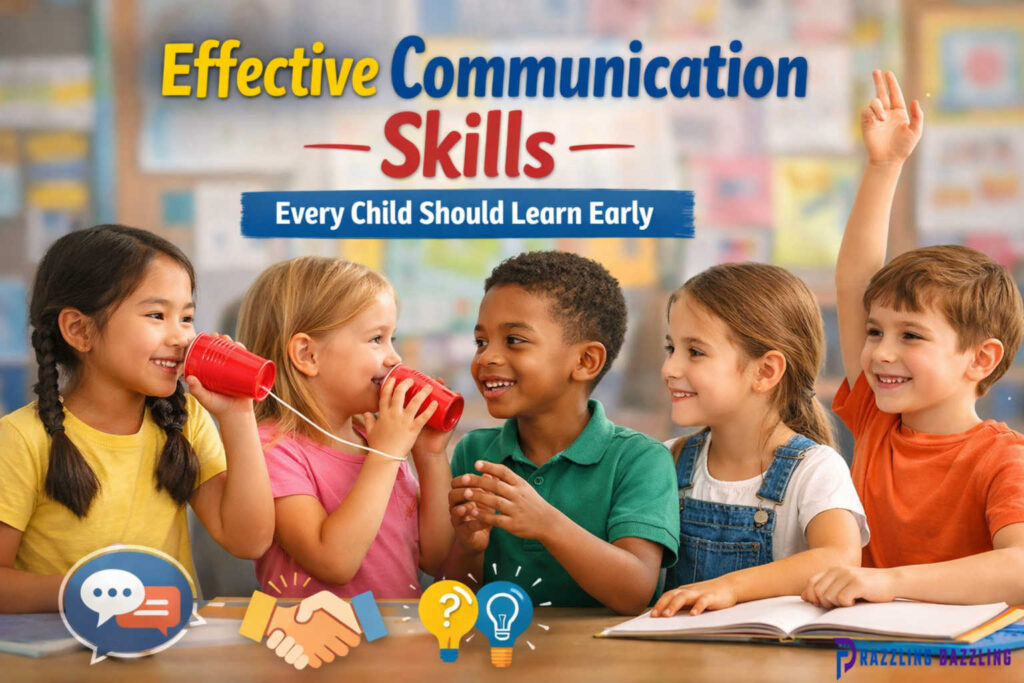
Communication is one of the most vital skills a child can develop. It forms the foundation for expressing thoughts, building relationships, and achieving success in both academic and personal life.
At Razzling Dazzling, we understand that nurturing communication skills from a young age can profoundly impact a child’s confidence, social abilities, and overall development.
Why Communication Skills Are Crucial for Children
From the first words a child speaks to presenting ideas in school or engaging in social interactions, communication plays a central role in a child’s growth. Here’s why it’s crucial:
- Boosts Confidence: Children who can express themselves clearly feel more confident in sharing ideas and interacting with others. Confidence is key to facing challenges and making friends.
- Enhances Academic Performance: Good communication allows children to ask questions, understand instructions, and participate actively in learning activities.
- Strengthens Relationships: Effective communication helps children build strong connections with family, peers, and teachers.
- Develops Emotional Intelligence: Expressing thoughts and feelings helps children manage emotions, show empathy, and understand others’ perspectives.
- Prepares for the Future: Strong communication skills are highly valued in higher education and workplaces. Starting early gives children a lifelong advantage.
Core Communication Skills Every Child Should Learn
Teaching communication is more than encouraging a child to talk. It involves a mix of verbal, non-verbal, and social skills that together create effective communicators.
Active Listening
Active listening is the ability to focus completely on what someone is saying, understand their message, and respond thoughtfully.
- Why It Matters: Children who listen actively are better at following instructions, understanding others, and engaging in meaningful conversations.
- How to Teach:
- Encourage eye contact while someone is speaking.
- Practice repeating back what was said in their own words.
- Play listening games like “Simon Says” or storytelling activities.
Clear Verbal Expression
Children need to articulate their thoughts in a structured and understandable way.
- Why It Matters: Clarity prevents misunderstandings and helps children express needs, opinions, and ideas confidently.
- How to Teach:
- Introduce new vocabulary in context during conversations.
- Encourage children to narrate experiences or stories.
- Use fun role-playing scenarios to practice dialogue.
Non-Verbal Communication
Communication isn’t just about words. Body language, facial expressions, gestures, and tone of voice play an essential role.
- Why It Matters: Non-verbal cues convey feelings and intentions, helping children understand and express emotions.
- How to Teach:
- Play “emotion charades” where children act out feelings without words.
- Discuss how posture, eye contact, and gestures influence communication.
- Encourage mindful use of facial expressions and tone during interactions.
Empathy and Understanding
Communication is most effective when children can relate to others’ feelings and perspectives.
- Why It Matters: Empathy fosters strong friendships, reduces conflicts, and encourages supportive interactions.
- How to Teach:
- Read stories and ask children how characters might feel.
- Discuss real-life situations and explore different viewpoints.
- Model empathetic language like “I understand how you feel.”
Asking Questions
Curiosity drives learning. Teaching children to ask questions effectively is a critical communication skill.
- Why It Matters: Asking questions helps children clarify information, explore ideas, and show interest.
- How to Teach:
- Encourage open-ended questions (“What do you think will happen next?”).
- Celebrate curiosity and reward thoughtful inquiries.
- Create a “question time” during daily routines or storytelling sessions.
Storytelling Skills
Storytelling combines creativity, organization, and expression—key components of communication.
- Why It Matters: Children who can tell stories can present ideas clearly, engage audiences, and express imagination.
- How to Teach:
- Encourage children to share personal experiences or invented stories.
- Use picture prompts or story cubes to spark ideas.
- Teach sequencing (beginning, middle, end) to structure their narratives.
Conversational Skills
Effective conversation involves turn-taking, listening, responding, and respecting different viewpoints.
- Why It Matters: Conversation skills help children make friends, resolve conflicts, and participate in social activities.
- How to Teach:
- Practice polite greetings, asking questions, and taking turns in dialogue.
- Model conversational norms like staying on topic and not interrupting.
- Use games like “Pass the Question” to practice interactive conversations.
Confidence in Public Speaking
Speaking in front of others, even in small groups, is an essential communication skill for children.
- Why It Matters: Public speaking builds self-esteem, clarity, and persuasive skills.
- How to Teach:
- Start with small group presentations or show-and-tell activities.
- Encourage positive reinforcement rather than focusing on mistakes.
- Teach breathing techniques and posture to manage nervousness.
Digital Communication Etiquette
In today’s world, children also communicate through digital platforms like chat, email, and video calls.
- Why It Matters: Understanding online etiquette ensures respectful and safe communication.
- How to Teach:
- Set guidelines for polite messages and appropriate tone.
- Discuss the difference between online and face-to-face communication.
- Monitor and guide social media or online interactions in a supportive way.
Practical Ways to Foster Communication Skills in Children
Building communication skills requires consistent practice and supportive environments. Here are some actionable strategies:
Encourage Daily Conversations
Talk with your child about daily experiences, feelings, and interests. Ask open-ended questions to promote discussion.
Read Together
Reading improves vocabulary, comprehension, and expressive skills. Discuss stories, ask opinions, and act out scenes to enhance engagement.
Role-Playing and Dramatic Play
Pretend play allows children to practice social interactions, dialogue, and problem-solving in a safe environment.
Group Activities and Team Games
Team sports, board games, and group projects teach turn-taking, active listening, and respectful communication.
Provide Positive Feedback
Celebrate efforts in communication, whether it’s storytelling, asking questions, or presenting ideas. Positive reinforcement builds confidence.
Model Effective Communication
Children learn by observing adults. Show polite conversation, attentive listening, and empathy in your interactions.
Challenges Children May Face
While fostering communication, children may encounter certain challenges:
- Shyness or Social Anxiety: Some children may feel hesitant to speak or interact. Encouragement and gradual exposure help overcome this.
- Speech or Language Difficulties: Professional support from speech therapists may be necessary.
- Cultural and Language Differences: Multilingual or diverse cultural environments may require extra patience and adaptability.
- Digital Distractions: Excessive screen time can reduce face-to-face communication practice. Balancing digital use is important.
Understanding these challenges allows parents and educators to provide targeted support for growth.
Benefits of Early Communication Skill Development
Early development of communication skills has far-reaching advantages:
- Stronger Academic Foundations: Early verbal skills improve literacy, comprehension, and learning outcomes.
- Better Emotional Regulation: Children express feelings and manage conflicts effectively.
- Enhanced Social Connections: Friendships and peer acceptance are easier when children communicate well.
- Improved Problem-Solving Abilities: Expressing ideas clearly allows collaborative solutions.
- Long-Term Career Advantages: Early communication skills translate into confidence in presentations, interviews, and teamwork later in life.
We believe that equipping children with these skills early sets them up for a successful, confident, and well-rounded future.
Fun Activities to Practice Communication Skills
- Show and Tell: Children present an object and explain its significance.
- Story Circle: Each child contributes a line to a group story.
- Role Reversal: Children play the teacher or parent, explaining a topic to peers.
- Emotion Cards: Identify and act out emotions to practice empathy.
- Listening Games: Games like “Telephone” enhance attention and recall.
These activities make learning communication skills engaging and enjoyable.
FAQs About Communication Skills for Children
At what age should children start learning communication skills?
Children begin learning basic communication from infancy, and formal skills can be nurtured from ages 2–3 onward.
How can I help a shy child improve communication?
Provide a supportive environment, start with one-on-one conversations, role-playing, and small group interactions to gradually build confidence.
Are digital platforms good for learning communication skills?
Yes, if used mindfully. Video calls and educational apps can enhance verbal and written communication while teaching etiquette.
Can storytelling improve academic performance?
Absolutely. Storytelling enhances vocabulary, comprehension, creativity, and confidence in verbal expression.
How do I know if my child needs professional help?
If your child struggles with speech clarity, understanding language, or social interactions beyond age-appropriate levels, consult a speech-language therapist or educator.
Final Thoughts on Nurturing Communication Skills
Developing effective communication skills early is a gift that lasts a lifetime. From active listening to storytelling, empathy to public speaking, each skill empowers children to express themselves confidently, understand others, and navigate life successfully. By integrating fun activities, modeling positive behaviors, and offering consistent guidance, parents and educators can cultivate strong communicators who thrive academically, socially, and emotionally.
At Razzling Dazzling, we are committed to supporting parents and teachers in nurturing these vital skills, ensuring every child grows into a confident and capable communicator.