
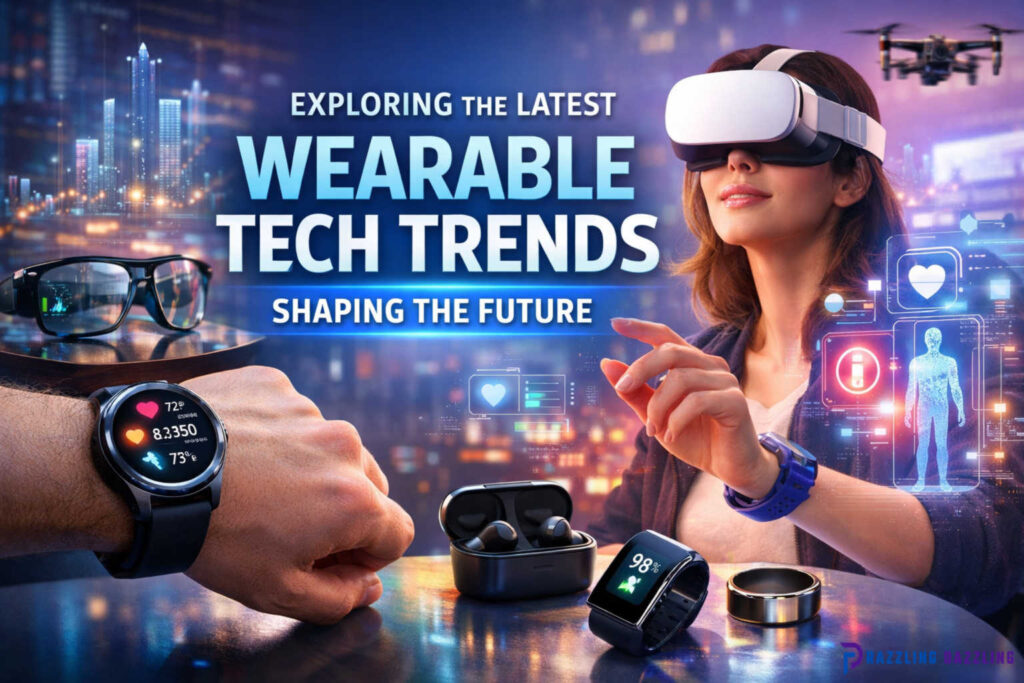
Wearable technology has rapidly evolved from simple novelty gadgets to powerful tools that enrich daily life, improve health, and redefine personal connectivity. Modern wearables are no longer limited to basic fitness trackers — they now include advanced smartwatches, augmented reality devices, biometric wearables, sleep-tracking rings, smart clothing, and more.
At Razzling Dazzling, we’re excited to take you on a deep dive into the latest wearable tech trends that are shaping the future and transforming how we live, work, and play.
What Is Wearable Technology?
Wearable technology refers to electronic devices designed to be worn on the body — often seamlessly integrated into clothing or accessories — to monitor information, offer notifications, or provide advanced computing capabilities. These devices typically connect to smartphones or cloud platforms and leverage sensors to collect and transmit data.
Once considered futuristic, wearables are now mainstream. From health monitoring and fitness tracking to workplace productivity and immersive experiences, wearable tech is expanding into numerous industries with creative and meaningful use cases.
Why Wearables Matter Today
Wearables are among the fastest-growing segments in consumer tech due to several key benefits:
- Health Insights & Wellness: Devices can continuously monitor vital signs, sleep patterns, and activity levels, empowering users to make smarter lifestyle choices.
- Convenience & Connectivity: Wearables keep you connected through notifications, calls, directions, and hands-free controls.
- Enhanced Experiences: Augmented reality (AR) and virtual reality (VR) wearables are redefining education, entertainment, design, and collaboration.
- Work Productivity: Smart glasses and wearable sensors are improving workplace efficiency and safety in industries like manufacturing, logistics, and healthcare.
Wearables are no longer niche — they’re integral to how people navigate modern life.
Trend 1: Smartwatches Evolve Beyond Fitness Tracking
Smartwatches paved the way for consumer wearables, but today’s devices are much more than pedometers on the wrist. They’ve become powerful mini-computers packed with sensors and apps.
New Capabilities in Smartwatches
Advanced Health Monitoring
Smartwatches now support:
- Blood oxygen (SpO2) monitoring
- ECG (electrocardiogram) capabilities
- Stress tracking
- Irregular heartbeat detection
- Temperature sensing
These features help users better understand their health and alert them to possible risks.
On-Device Apps and Payments
With robust operating systems, smartwatches can run apps independently of smartphones — from navigation to music streaming and contactless payments.
Always-On Connectivity
Cellular variants allow wearers to stay connected even without their phones nearby — ideal for runners, travelers, or anyone on the go.
Personalized Health Data
AI-driven analytics deliver personalized insights and long-term health trend reports.
Why Smartwatches Remain Essential
Smartwatches blend functionality with convenience. They’re ideal for everyday use, fitness goals, and proactive health monitoring. With every new generation, these devices grow more relevant and powerful.
Trend 2: Wearables for Mental Health and Stress Management
The rise of mental health awareness has accelerated demand for wearables focused on emotional well-being. Unlike traditional fitness tracking, these devices use advanced sensors and algorithms to monitor physiological signals tied to stress, mood, and recovery.
Key Features in Mental Well-Being Wearables
Heart Rate Variability (HRV) Tracking
HRV helps measure stress and recovery by analyzing the variation between heartbeats.
Breathing Exercises & Guided Sessions
Some wearables offer in-app guided breathing and mindfulness practices.
Mood Logging and Predictive Analytics
Users can log emotions, and the device AI predicts patterns and suggests lifestyle adjustments.
Sleep Quality Insights
Sleep disturbances are directly tied to stress. Wearables can detect deep, light, and REM sleep phases to improve sleep habits.
These features empower users to understand their emotional well-being and take action before stress becomes chronic.
Trend 3: Smart Clothing & Smart Fabrics
Wearables are expanding beyond wrist-worn devices into smart clothing and textiles embedded with sensors. These innovations are the next frontier in unobtrusive health and performance monitoring.
Examples of Smart Clothing
- Sensor-embedded shirts that track heart rate and respiration
- Compression garments that monitor muscle performance
- Smart socks that analyze gait and balance
- Temperature-regulated fabrics that adapt to environmental conditions
Applications
- Athletic Performance: Provides detailed data on speed, stride, and muscle fatigue.
- Medical Monitoring: Tracks vital signs without bulky devices.
- Comfort & Safety: Automatically adjusts thermal levels based on wearer temperature.
Smart clothing transforms everyday apparel from static garments into dynamic, data-powered systems.
Trend 4: AR & VR Wearables — The New Digital Realities
Augmented reality (AR) and virtual reality (VR) wearables are changing how we experience digital content:
AR Wearables
AR glasses overlay digital information onto the physical world. Unlike VR, which immerses users in virtual environments, AR enhances real-world experiences.
Use Cases:
- Navigation and hands-free directions
- Real-time translation
- On-the-job instructions and collaboration
- Interactive learning and training
VR Headsets
VR provides fully immersive experiences — ideal for gaming, virtual meetings, education, and simulations.
Key Benefits:
- Unmatched immersion for entertainment and training
- Remote collaboration in virtual workspaces
- Enhanced visualization for designers and architects
The combined growth of AR and VR wearables signals a future where the digital and physical worlds blend seamlessly.
Trend 5: Ear-Wearables and Audio Innovations
Ear-based wearables such as true wireless earbuds have become ubiquitous. But the latest innovations go beyond audio playback:
Next-Gen Audio Wearables
Biometric Sensing Earbuds
Detect heart rate and temperature directly from the ear canal.
Personalized Sound Profiles
AI adjusts audio based on ear shape, hearing sensitivity, and environment.
Real-Time Noise Control
Adaptive noise cancellation dynamically adjusts to surroundings.
Audio-First Health Metrics
Ear-based sensors can track stress and alertness levels.
These trends showcase how earbuds are evolving into health-centric wearables.
Trend 6: Wearables in Healthcare & Medical Monitoring
One of the most impactful trends in wearable tech is its integration into healthcare. Today’s wearables can assist in early detection, ongoing monitoring, and chronic care management.
Medical Wearables for Health Monitoring
Continuous Glucose Monitoring (CGM)
Wearables that help diabetics monitor blood sugar levels in real time.
mart Patches
Adhesive patches track vital signs and transmit data to healthcare providers.
Remote Patient Monitoring (RPM)
Enables doctors to monitor patients from afar, reducing hospital visits.
Fall Detection & Emergency Alerts
Wearables can trigger alerts if a sudden fall or abnormal activity is detected.
Transformative Healthcare Benefits
- Early detection of medical irregularities
- Personalized care plans
- Reduced hospital readmissions
- Better chronic condition management
The fusion of wearables and healthcare is reshaping patient care with real-time data and personalized insights.
Trend 7: Fashion Meets Wearable Tech
Wearables are no longer purely functional — they’re becoming fashion statements. Consumers want devices that reflect personal style, just like clothing or jewelry.
Wearable Tech with Style
- Designer smartwatches and luxury wearables
- Customizable bands, finishes, and aesthetic options
- Wearable jewelry that doubles as health or notification devices
Brands are partnering with designers to ensure wearables feel as stylish as they are smart.
Trend 8: Sustainability & Eco-Friendly Wearables
Sustainability is now a major focus in tech. Wearable brands are prioritizing eco-friendly materials, recyclable components, and energy-efficient designs.
Eco-Trends in Wearable Tech
- Biodegradable bands and casings
- Long-lasting batteries with optimized charging
- Reduced packaging waste
- Modular designs for easier repairs
Sustainable wearables align with consumer values and the growing demand for responsible tech.
Trend 9: Enterprise Wearables & Workplace Efficiency
Wearables are expanding into professional environments, improving productivity, safety, and workflow.
Examples of Workplace Wearables
- Smart glasses for hands-free instructions
- Wearable sensors for worker safety monitoring
- Communication wearables for secure messaging
- Location-tracking devices for logistics and warehousing
Industries like manufacturing, healthcare, and logistics are investing heavily in wearables to optimize performance and minimize risks.
Trend 10: The Rise of AI-Driven Wearable Experiences
Artificial intelligence (AI) is the engine behind the most advanced wearable features. Machine learning algorithms analyze data over time to make wearables smarter and more personalized.
AI Enhancements
- Predictive health insights
- Personalized fitness recommendations
- Adaptive notification filtering
- Context-aware interactions
AI makes wearables more intuitive — learning from user habits and continuously improving experiences.
How Wearables Will Shape the Future
Here’s a look at what the next decade may hold for wearable technology:
Wearables as Everyday Essentials
Wearables will become as common as smartphones — seamlessly woven into clothing, accessories, and daily life.
True Health Integration
Wearables could help detect diseases before symptoms appear — potentially transforming preventive medicine.
Seamless Connectivity
Future wearables will operate with minimal user intervention, anticipating needs and delivering value proactively.
Multi-Device Integration
Wearables will function as part of interconnected ecosystems — communicating with smart homes, vehicles, workplaces, and public infrastructure.
Personalized AI Assistants
Instead of generic voice assistants, wearables may offer AI companions that deeply understand personal preferences, habits, and health trends.
What to Consider Before Buying Wearables
To choose the right wearable tech for your life, keep these factors in mind:
Compatibility
Ensure that the device works with your smartphone or operating system.
Battery Life
Look for devices with strong battery performance — especially if health or GPS tracking is important.
User Experience
Choose devices with intuitive interfaces and reliable apps.
Accuracy
Check sensor accuracy if health monitoring is a key use case.
Comfort & Style
Wearables should be comfortable and match your personal aesthetic.
Brand Spotlight: Razzling Dazzling Recommends
We test and curate top smart tech that delivers real value. Our favorite wearable categories include:
- Advanced Smartwatches: for health, connectivity, and lifestyle optimization
- AI-Enhanced Earbuds: for personalized audio and health metrics
- Sleep & Recovery Trackers: for better rest and performance
- Fitness Rings: for a discreet but powerful wellness companion
Each wearable is chosen for reliability, innovation, and user satisfaction — because your tech should not just be smart, but impactful.
Common Reader Questions About Wearable Tech
Are wearables worth investing in?
Yes — particularly for health monitoring, productivity, and seamless connectivity.
How accurate are health metrics from wearables?
Accuracy varies by device and sensor quality, but top models provide useful insights that can guide lifestyle improvements.
Can wearables replace medical devices?
Not yet. While they offer valuable data, they do not replace professional medical equipment or diagnoses.
Do wearables work without a smartphone?
Some advanced wearables have independent connectivity (LTE models), but most still rely on paired devices for full functionality.
What’s next after smartwatches?
Expect growth in AR wearables, smart clothing, bio-sensing devices, and AI-powered personal assistants.
Your Wearable Tech Journey Starts Now
Wearable tech is more than gadgets — it’s a gateway to smarter living. These devices empower you with knowledge, convenience, and personalized experiences that adapt to your life. Whether you’re interested in health, productivity, entertainment, or work, wearables will play a central role in shaping the future of daily living.
Embrace the wearable revolution with Razzling Dazzling, and explore cutting-edge tech that keeps you informed, connected, and one step ahead.