
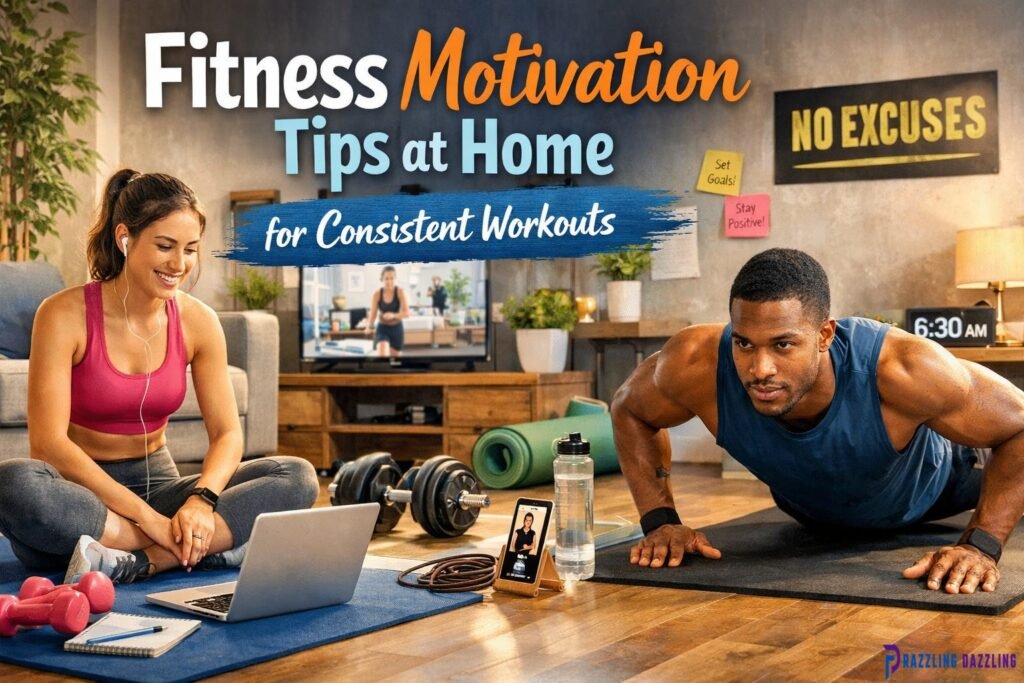
Staying motivated to work out at home can often be more challenging than going to a gym. Without the buzz of a fitness class or the presence of a trainer, it’s easy to skip a session and procrastinate.However, with the right strategies and mindset, home workouts can become consistent, enjoyable, and highly effective.
At Razzling Dazzling, we’ve compiled expert tips and practical techniques to keep your fitness journey on track from the comfort of your own home.
Why Staying Motivated at Home Is a Challenge
Before diving into strategies, it’s important to understand why motivation at home can be tricky:
- Distractions are everywhere: From your phone to household chores, home environments are filled with interruptions.
- No external accountability: Unlike a gym or fitness class, no one is monitoring your attendance.
- Monotony can kill enthusiasm: Repeating the same exercises can lead to boredom and skipped sessions.
- Energy and mindset fluctuations: Working out requires both mental and physical readiness, which can vary daily.
Understanding these barriers is the first step in overcoming them. The next step is to implement practical techniques to stay motivated and consistent.
Set Clear and Achievable Goals
Motivation thrives when you have a clear destination. Setting specific, measurable, achievable, relevant, and time-bound (SMART) goals gives your workouts purpose.
- Start small: If you’re new to fitness, aim for 15–20 minutes per session rather than an hour-long intense workout.
- Track progress: Use a fitness app, journal, or calendar to mark your workouts and improvements.
- Celebrate milestones: Completing your first week of consistent workouts deserves recognition! Rewards, even small ones, can boost motivation.
- Focus on outcomes beyond weight loss: Think about improved energy, better sleep, or increased strength as tangible benefits.
Create a Dedicated Workout Space
A dedicated space can make a huge difference in your consistency and mindset. Even if it’s a corner of your living room, having a workout area signals your brain that it’s time to exercise.
- Keep it clutter-free: A clean space reduces mental distractions.
- Add motivational elements: Posters, quotes, or your favorite workout playlist can energize your sessions.
- Have equipment ready: Even minimal gear like resistance bands, dumbbells, or a yoga mat can enhance your workouts.
- Ensure proper lighting and ventilation: A bright, airy space improves mood and performance.
Develop a Consistent Routine
Consistency is key to forming a habit. Scheduling workouts like appointments ensures they don’t get pushed aside.
- Set a fixed time: Morning workouts are often easier to stick with because you haven’t yet faced daily distractions.
- Use a weekly planner: Plan your workouts ahead of time, including rest days.
- Incorporate variety: Alternate between cardio, strength, flexibility, and balance exercises to avoid boredom.
- Start with short sessions: Even 10–15 minutes counts. Gradually increase duration as consistency improves.
Make Workouts Fun
Exercise should not feel like a punishment. The more enjoyable it is, the more likely you’ll stick with it.
- Dance workouts: High-energy music can turn exercise into a joyful experience.
- Follow online classes: Platforms like YouTube or fitness apps offer guided routines with variety.
- Gamify your workouts: Use apps that track points, badges, or challenges to make it competitive and fun.
- Workout with family or friends virtually: Video calls for group sessions keep motivation high.
Use Technology to Your Advantage
Modern technology can make home workouts more engaging and trackable.
- Fitness apps: Track progress, get exercise recommendations, and set reminders.
- Wearable devices: Smartwatches and fitness trackers monitor heart rate, calories burned, and steps.
- Virtual trainers: Subscription services or online platforms provide structured programs.
- Music and podcasts: Energetic playlists or motivational podcasts keep you engaged and distracted from fatigue.
Focus on Short-Term Wins
Long-term goals are important, but celebrating short-term achievements boosts motivation daily.
- Daily check-ins: Acknowledge completing a workout, even if it’s brief.
- Set micro-goals: 10 push-ups more than yesterday or adding 5 minutes to your cardio session counts as progress.
- Visual progress: Use photos or measurements to see physical changes. This reinforces that your effort is paying off.
Mix Up Your Workouts
Variety keeps the mind and body challenged. Doing the same exercises repeatedly can lead to boredom and plateaus.
- Alternate cardio and strength days: Jump rope, running in place, bodyweight exercises, or resistance band workouts.
- Try HIIT workouts: High-intensity interval training offers effective results in shorter periods.
- Include flexibility and balance: Yoga, Pilates, or stretching routines improve posture, mobility, and recovery.
- Challenge yourself safely: Gradually increase weights or resistance to prevent stagnation.
Incorporate Accountability
Even at home, accountability increases commitment. You don’t have to go to a gym to have someone check in.
- Workout buddy system: Partner with a friend or family member for daily or weekly sessions.
- Join online communities: Social media groups, fitness challenges, or forums provide support.
- Hire a virtual trainer: Personalized guidance and scheduled sessions create structure.
- Share your goals publicly: Posting progress can add motivation to keep going.
Mindset and Mental Motivation
Fitness is as much mental as physical. Cultivating a positive mindset can transform consistency.
- Use affirmations: Remind yourself why you started and what you aim to achieve.
- Visualize success: Imagine completing your workout and the post-exercise satisfaction.
- Practice self-compassion: Some days will be harder than others. Missing a session is not failure, just adjust and continue.
- Focus on feelings, not just results: Enjoy the energy boost, stress relief, and endorphin rush from workouts.
Reward Yourself Strategically
Incentives can reinforce consistent behavior. They don’t always need to be material rewards.
- Treat yourself to a healthy snack or smoothie post-workout.
- Buy new workout gear after a milestone.
- Allow a relaxing activity like a bath or meditation session after completing the week’s workouts.
- Track streaks: Apps that count consecutive days of workouts create a gamified reward system.
Overcoming Common Obstacles
Even with strategies in place, obstacles will appear. Here’s how to handle common challenges:
- Lack of time: Break workouts into 5–10 minute segments; short bursts are effective.
- Low energy: Adjust intensity or try workouts at a time when you feel most energized.
- Loss of motivation: Revisit goals, change your playlist, or try a new workout style.
- Limited space: Bodyweight exercises, yoga, or resistance bands are space-efficient.
Nutrition and Lifestyle Support
Motivation isn’t just about willpower; your body needs fuel and rest.
- Eat balanced meals: Adequate protein, healthy fats, and complex carbs support energy levels.
- Stay hydrated: Dehydration can reduce performance and motivation.
- Prioritize sleep: Poor rest can lead to skipped workouts.
- Manage stress: Meditation, deep breathing, or a brief walk helps prevent mental burnout.
Track and Measure Progress
Seeing tangible results keeps motivation alive.
- Fitness journals: Record workouts, weights, reps, and duration.
- Photos and measurements: Weekly photos or measurements help visualize change.
- Performance tracking: Track endurance, flexibility, or strength improvements.
- Reflect regularly: Celebrate improvements, even small ones, to stay motivated.
Make Fitness a Lifestyle, Not a Chore
The ultimate goal is to make exercise an integral part of daily life rather than a task.
- Integrate movement into daily routines: Stretch while watching TV or take stairs instead of elevators.
- Focus on activities you enjoy: Hiking, dancing, or sports can double as workouts.
- Adopt a positive fitness identity: See yourself as an active person rather than someone “trying to exercise.”
- Stay flexible: Life happens. Adjust your schedule and continue without guilt.
Common Questions About Home Fitness
How can I stay motivated when working out alone at home?
Create a routine, set goals, track progress, and use technology or online communities for accountability.
What is the best time of day to exercise at home?
Morning workouts are effective for consistency, but the best time is whenever you can stick to it regularly.
How do I prevent boredom in home workouts?
Mix cardio, strength, and flexibility exercises, follow online classes, or gamify your sessions.
Do I need equipment for effective home workouts?
No, bodyweight exercises are sufficient, but minimal equipment like resistance bands or dumbbells can enhance variety.
How long should a home workout session be?
Start with 15–30 minutes per session and increase gradually as you build consistency.
Final Thoughts: Staying Consistent and Motivated
Achieving fitness goals at home is entirely possible with the right strategies. Motivation is built by combining clear goals, enjoyable routines, accountability, and a positive mindset. By creating a dedicated space, mixing workouts, celebrating small victories, and supporting your body with proper nutrition and rest, home workouts can become consistent, effective, and even fun.
At Razzling Dazzling, we believe that staying active at home doesn’t have to be a struggle. With these tips, you can build a sustainable fitness routine that empowers your body and mind, helping you achieve long-term health and wellness—one workout at a time.